Whoever wins the humanoid race, they sell the joints
As the World Robot Conference opens in Beijing, the quieter contest is over who supplies the reducers, bearings and eyes inside every machine on the floor — and whether the West's component incumbents can hold a position domestic challengers are swarming.
ASR Newsdesk — Staff byline
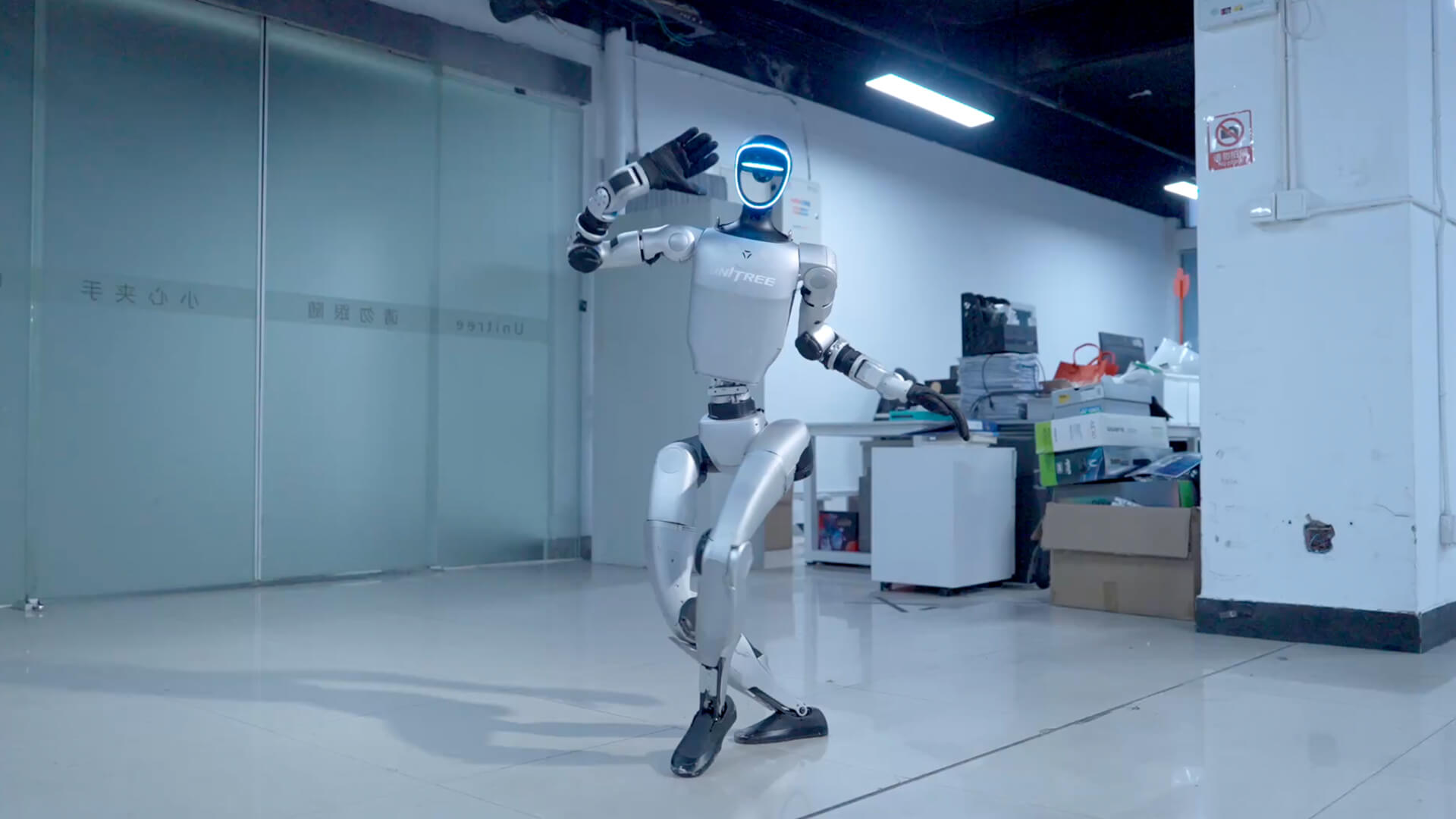
When the World Robot Conference opens at Beijing E-Town on 19 August, the cameras will point at the humanoids. Unitree, UBTECH, Galbot and a dozen rivals will run, jump and pour drinks for five days, alongside the provincial "humanoid robotics innovation centres" that demonstrate how thoroughly the Chinese state has organised itself around embodied AI. The scale is its own statement: more than 300 exhibitors, up 36 per cent on last year, showing over 2,000 exhibits and 150 product launches under the theme "human-robot symbiosis, industry-demand integration".
The more consequential exhibitors make almost nothing you would recognise as a robot. Schaeffler, Harmonic Drive and RealSense represent the last significant Western and Japanese holdings in the humanoid supply chain, and each has come to Beijing to defend a position the rest of the exhibitor list is openly trying to take.
The anatomy lesson
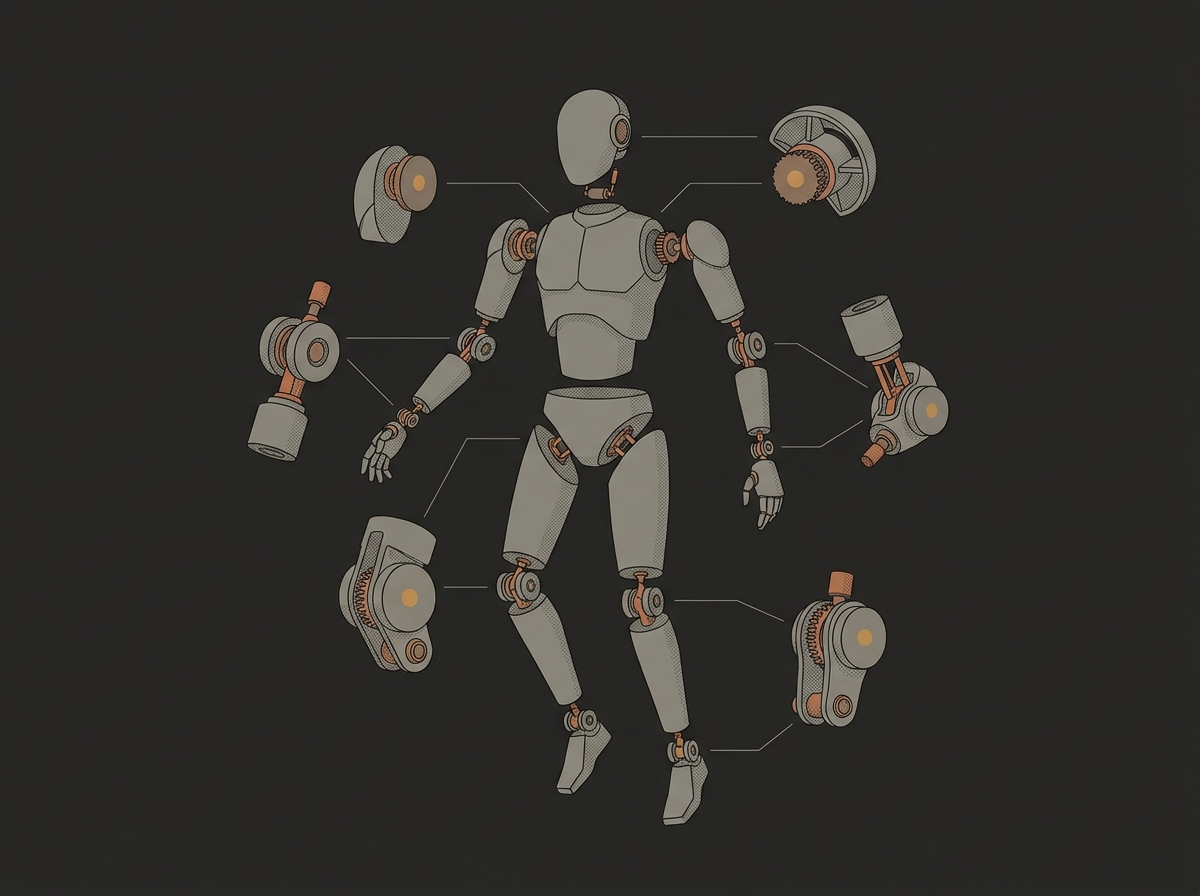
Strip any humanoid on the floor and the nationality of its parts tells a story the demos do not. China has won final assembly and integration decisively; nobody disputes that the machines themselves are now designed and built there at a pace no other country matches. But the highest-value grams have historically been imported — and by Schaeffler's own reckoning, the actuator stack alone accounts for around half of a humanoid's bill of materials by value.
The strain-wave reducer that lets a joint be both small and precise was not a Japanese invention. It was patented in 1957 by an American, C. Walton Musser, working as a research adviser at United Shoe Machinery in Massachusetts. A Japanese licensee, Hasegawa Gear Works, built it under contract to USM and eventually became Harmonic Drive Systems Inc. The technology went to the Moon in the Apollo Lunar Rover's wheels, built by USM's own Harmonic Drive division. Sixty years later there is one in nearly every rotary joint on the Beijing show floor, and the company that dominates their supply is the licensee, not the originator.
Precision bearings and planetary roller screws — the parts that turn motor torque into controlled linear force — are the home turf of German tier-ones like Schaeffler. And a large share of the depth cameras that give these machines their sense of space come from RealSense, the Californian vision company that spent a decade inside Intel.
That dependency is precisely what the domestic industry is organised to end. Alongside Harmonic Drive's Shanghai subsidiary on the exhibitor list sit Leader Harmonious Drive, Zhejiang Laifual Drive, Wuhan Fanzhou Harmonic Drive, Hangzhou Seenpin and Hubei Kofon — five Chinese reducer and transmission makers, several with "harmonic" in their names, exhibiting alongside the company whose technology they are built to displace. The bearing story is the same: Luoyang Hongyuan and Zhejiang XCC will be showing catalogue parts aimed at exactly the sockets Schaeffler supplies.
Schaeffler's all-in bet
Which is what makes Schaeffler's response the most interesting industrial decision on the floor. On 27 February the German group established a wholly owned embodied-intelligence robotics subsidiary in Taicang, Suzhou — not a sales office but an operation with its own R&D centre, digital production lines, a computing hub and dedicated data-collection and AI-training facilities. It will make bearings, roller screws, precision gearboxes, motors and sensors, and sell integrated modules for rotary and linear actuation, thermal management and battery management. Alongside the hardware, it plans to sell services no bearing catalogue ever included: iterative model training and data sharing for humanoid developers.
“The only way to hold its position is to embed its most advanced manufacturing inside the ecosystem trying to replace it.”
The timing was not subtle. The announcement landed the day after German Chancellor Friedrich Merz toured Unitree's Hangzhou headquarters accompanied by thirty senior executives from leading German firms. Schaeffler has spent three decades in Taicang, growing from a thirty-person workshop to a regional operation employing 19,000 people, in a city where roughly 70 per cent of vehicle components can be sourced locally. That supply-chain density is now being pointed at robots.
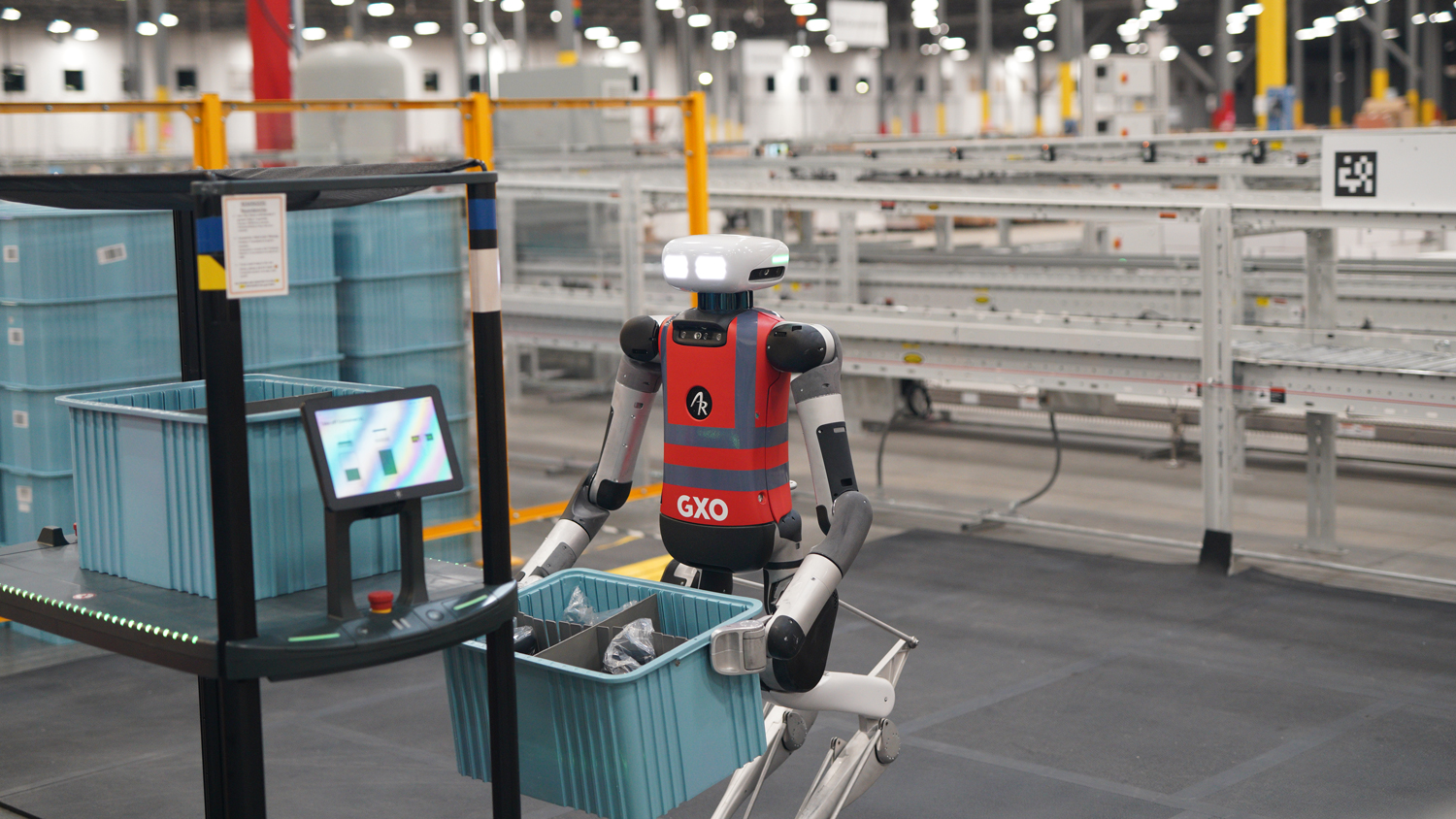
Read plainly, an 80-year-old German tier-one automotive supplier — watching its combustion-engine business erode — has concluded that the volume market for humanoid components will be Chinese, and that the only way to hold its position is to embed its most advanced manufacturing inside the ecosystem trying to replace it. The group has been assembling the other side of the ledger too, signing partnerships with Chinese humanoid makers including ROKAE and Leju as both supplier and customer, and has said it intends to put humanoid robots to work in its own factories.
The eyes have it
RealSense arrives in Beijing as a different kind of test case. Spun out of Intel on 11 July 2025 with a $50 million Series A led by a semiconductor-focused private equity firm, with Intel Capital and the MediaTek Innovation Fund participating, the company now collaborates with NVIDIA on physical-AI perception across the Jetson Thor platform and Isaac Sim. It claims its depth cameras sit in some 60 per cent of the world's autonomous mobile robots and humanoids — a company figure, but not an implausible one.
Its presence is, in effect, an American perception company selling the eyes of China's robot fleet while Washington debates how much AI-adjacent hardware should cross the Pacific at all. For now, depth cameras sit outside the export-control perimeter that has closed around advanced accelerators. Whether that lasts is one of the more consequential open questions in the industry, and one suspects RealSense's strategists spend more time on it than its engineers would like.
For now
The honest caveat in any supply-chain story is the phrase "for now". Harmonic Drive's patents expired long ago; what protects it is manufacturing tolerance built over decades, and tolerances are learnable. The Chinese reducer makers are not yet equivalent — teardowns still show gaps in lifetime and backlash — but the gap is closing the way every such gap in Chinese manufacturing has closed, which is to say faster than the incumbent's planning cycle assumed.
That is the frame worth carrying through the halls at E-Town this month. Beijing's own numbers make the direction plain: humanoid exports from the city grew 210 per cent year on year in the first quarter of 2026. The humanoid race has no shortage of coverage, and most of it will be about which robot walks best. The more durable question is underneath the skin: whoever wins, somebody sells the joints, the screws and the eyes. Musser's licensee already proved the manoeuvre works. It simply took Hasegawa sixty years, and the companies a few aisles over do not intend to wait that long.
Cite this article
ASR Newsdesk. "Whoever wins the humanoid race, they sell the joints." Autonomous Systems Review, 5 Aug 2026. https://autonomoussystemsreview.com/articles/whoever-wins-the-humanoid-race-they-sell-the-joints.