Profile: Peggy Johnson, the CEO trying to make humanoid robots boring
Qualcomm, Microsoft, Magic Leap, and now Agility Robotics — the executive running the West's most-deployed humanoid company has built a career on unfashionable patience. As Digit heads for the public markets, her bet is that reliability beats backflips.

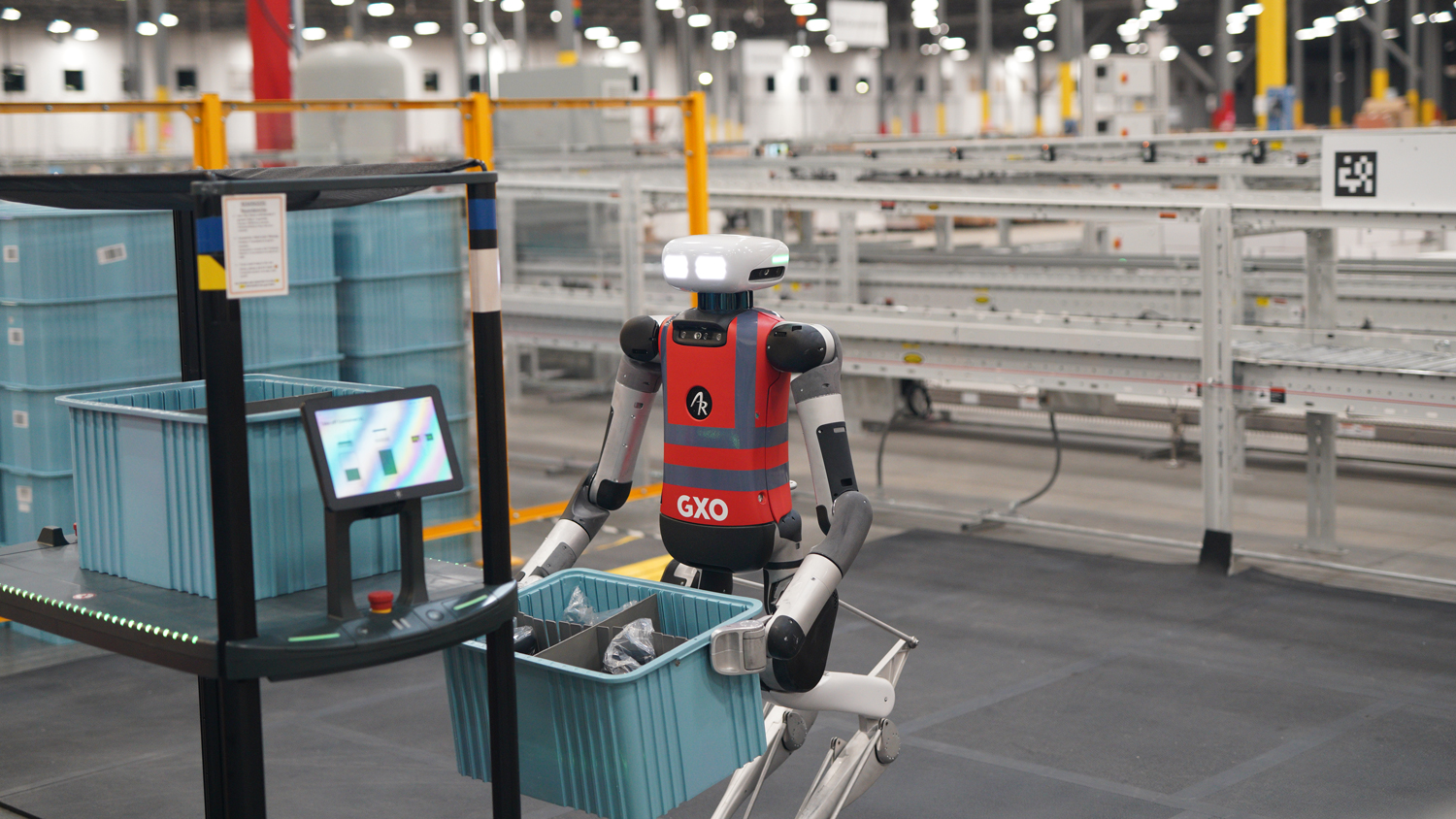
In an industry that communicates in viral video, Peggy Johnson's flagship product spent its first years of commercial life behind Plexiglas. Digit, Agility Robotics' bipedal warehouse robot, worked inside designated safety zones at its early customer sites to satisfy US workplace rules — caged, unglamorous and, unusually for a humanoid, generating monthly revenue.
That contrast is the Johnson method in miniature. She arrived at Agility in March 2024 after one of the less flashy elite CVs in technology: roughly a quarter-century at Qualcomm, six years running business development for Microsoft under Satya Nadella, then the unenviable job of steering augmented-reality company Magic Leap out of its consumer fantasy and into enterprise. At Agility she inherited a robot with backwards-bird knees and a decade of locomotion research, and set about the part of robotics that produces no viral clips: certification, standards bodies, and manufacturing at scale.
The unsexy agenda
Within months of her arrival, Digit took its first real job — moving totes at a Spanx facility in Georgia under a multi-year robots-as-a-service deal with GXO — and Johnson was blunt about the labour maths behind it, pointing to over a million unfilled US warehouse roles built on repetitive lifting.
> [QUOTE] "Nobody wants these jobs." — Peggy Johnson, Fortune Brainstorm Tech
The deployments that followed read like a supply-chain who's-who — Schaeffler (which took an equity stake), Toyota Motor Manufacturing Canada, Mercado Libre, Amazon trials — and the milestones she celebrates are regulatory: an OSHA-recognised safety approval, and a seat at the table drafting the first global safety standards for humanoids, with early frameworks expected this year.
Her current obsession is what Agility calls cooperative safety — engineering Digit to work uncaged alongside people, with a prototype in the lab, a cooperatively-safe version of the robot due by the end of 2026 and full commercial availability targeted for early 2027. She concedes the subject lacks glamour.
> [QUOTE] Safety is "absolutely a must if we are to have these devices operating in our human world." — Johnson, to Mobile World Live
On AI, she is a pragmatist
Where rivals promise end-to-end neural everything, Johnson describes Agility as LLM-agnostic — using models including Claude and Gemini as a semantic layer that translates instructions into behaviour, while treating the physical layer of balance, locomotion and manipulation as the company's decade-deep moat. Her favourite demonstration is deliberately domestic: engineers scattered rubbish on a floor and told Digit to clean up the mess; it sorted everything correctly, down to identifying bubble wrap as non-recyclable.
The public-markets test
In June, Agility announced it would go public through a $2.5 billion merger with Churchill Capital Corp XI — a SPAC, the structure whose 2021 class of robotics listings mostly ended in tears. Johnson, asked directly about that history, was characteristically unbothered.
> [QUOTE] "Keep delivering customer by customer, robot by robot." — Johnson, to TechCrunch
It is easy to be cynical about the vehicle. It is harder to be cynical about the record: an installed base measured honestly in the dozens, but with verified operating hours, named customers and shift schedules that no Western competitor can match. Johnson has also been working Washington as supply-chain nationalism reshapes her market.
> [QUOTE] "They want to ensure that this industry flourishes and thrives in the US." — Johnson, at the Abundance Summit
Whether public investors reward patience the way logistics customers have is the question the next year will answer. But if the humanoid sector does grow up — publishing its operating data, engineering for safety cases rather than showreels — it will look a great deal like the company Johnson is already running.
Cite this article
Rob Polli. "Profile: Peggy Johnson, the CEO trying to make humanoid robots boring." Autonomous Systems Review, 5 Aug 2026. https://autonomoussystemsreview.com/articles/profile-peggy-johnson-the-ceo-trying-to-make-humanoid-robots-boring.