Wave-powered offshore AI nodes are bypassing the land grid entirely
A new generation of autonomous, ocean-based compute platforms is harvesting wave energy and transmitting results via satellite — sidestepping permitting queues, utility constraints and the crippling cost of land-based cooling.

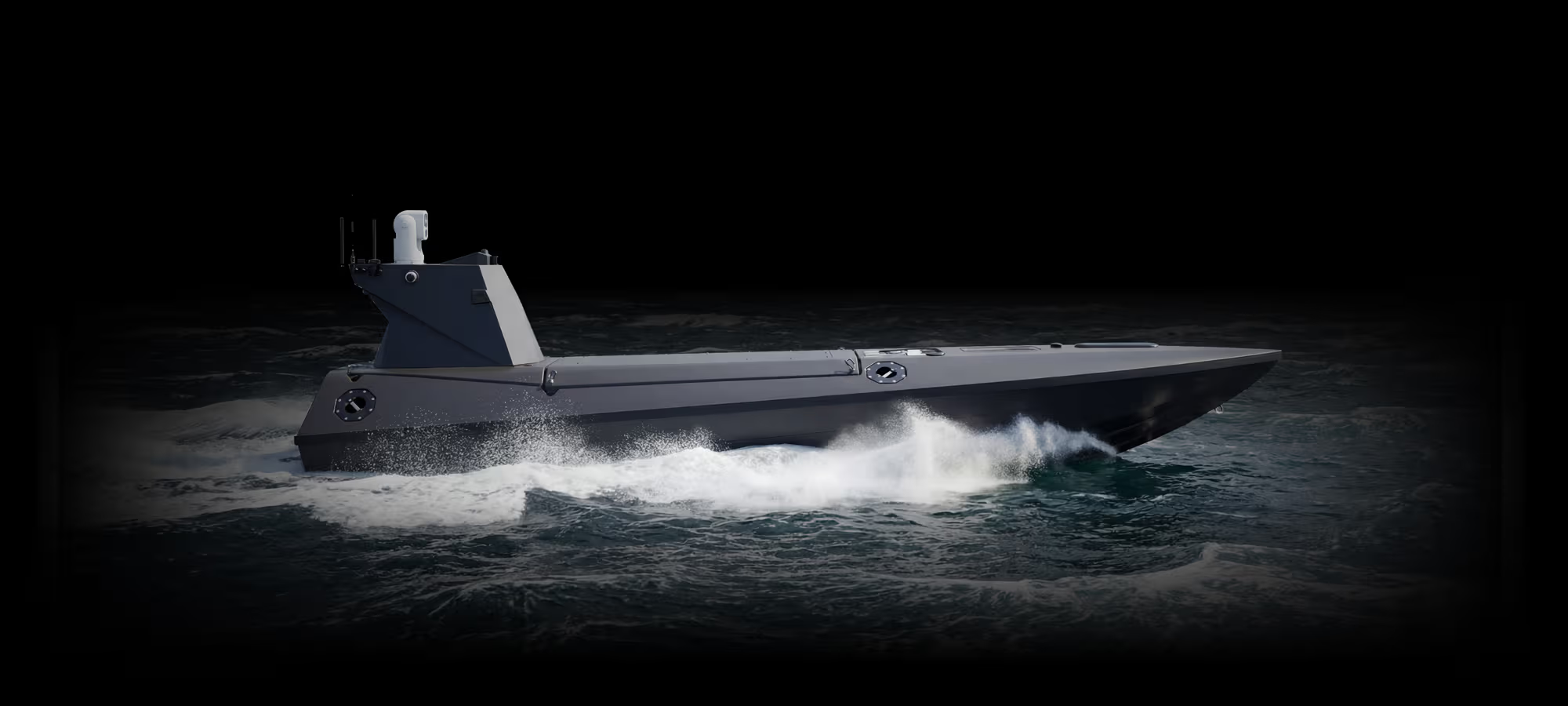
Picture a buoy-shaped node drifting in controlled autonomy several kilometres off a coastline, its hull rising and falling with Atlantic swells. Inside, NVIDIA GPUs are running inference workloads. The heat they generate is drawn away by seawater flowing through an integrated cooling loop. The results leave by satellite. No power cable reaches the shore. No planning permission was sought from a municipality. No utility company was consulted.
This is not a speculative rendering. It is the operational model that multiple well-funded companies were actively building toward by the second half of 2026 — and the implications for how AI infrastructure gets built, powered and located are considerable.
The bottleneck nobody planned for
The demand for AI compute has outrun the grid's ability to supply it. Data centres require not just power but reliable, high-density power — and in most jurisdictions, securing that means years of permitting, grid interconnection queues and infrastructure upgrades. Cooling adds further pressure: a conventional land-based data centre spends roughly 30% of its total energy budget simply managing heat. Build enough of them and the numbers become genuinely uncomfortable for utility planners and sustainability teams alike.
The ocean offers a different set of physics. Wave energy is continuous, predictable at the statistical level and abundant at the scales that matter. Seawater is an effectively infinite heat sink. And crucially, the open ocean sits outside the regulatory perimeter that makes terrestrial data centre development so slow and expensive.
Several organisations have now converged on the same insight from different directions: the fastest path to low-cost, low-carbon AI compute may not run through any national grid at all.
The platforms taking shape
Panthalassa is the most capitalised player in this space. In August 2026 the company raised a $225 million Series B round at a $2 billion valuation, led by Peter Thiel, to deploy its 'Ocean-3' nodes — GPU-equipped floating platforms that use autonomous positioning to stay in productive wave corridors and satellite links to deliver compute outputs. The company projects energy costs as low as $0.02 per kWh by avoiding subsea cables and operating at scale. That figure, if sustained at deployment, would represent a dramatic undercut of typical land-based energy rates for data centres.
On 26 October 2026, Ocean Power Technologies (NYSE: OPTT) and Stratum Holdings (NASDAQ: SRTM) signed a letter of intent to integrate NVIDIA B300 GPUs into PowerBuoy platforms for offshore AI inference. The PowerBuoy has an established operational history as an autonomous marine energy and sensing platform; adding high-density compute to it is a logical extension of an architecture that already handles power management and remote data transmission in deep water.
Mocean Energy's Blue Core system approaches the problem from the wave energy converter side, targeting between 500 kW and 1 MW per unit. Its seawater cooling loop consumes only 5% of the total energy budget — compared to the 30% overhead typical on land. That is not a marginal improvement; it is a structural change in the economics of running GPUs continuously.
At the larger end of the scale, Optimal Transit's 'Kraaken' concept proposes a 100 MW floating data centre constructed for less than $500 million, excluding compute hardware. For context, equivalent land-based facilities were costing between $900 million and $1.5 billion as of August 2026. The Kraaken would operate on self-propelled SWATH vessels, allowing it to reposition away from severe storm systems rather than engineering against them from a fixed foundation.
'The seawater cooling loop consumes only 5% of the total energy budget — compared to the 30% overhead typical on land.'
Proving the energy source
Wave energy conversion at meaningful scale is the load-bearing assumption beneath all of these platforms, and the evidence base has been strengthening. Eco Wave Power's installation at Jaffa Port recorded a peak power output of 56.7 kW during three-metre wave conditions in February 2026. That is a single small installation, but it demonstrates the ability to generate usable power from wave motion under real sea states and feed it into infrastructure.
More significant for the sector's credibility is the PacWave South facility off Newport, Oregon, which officially opened on 27 August 2026. It is a grid-connected wave energy test site designed to support up to 20 wave energy converters simultaneously — the first infrastructure of its kind in the United States built specifically to accelerate the technology toward commercial readiness. The existence of a purpose-built test range changes the speed at which new converter designs can be validated.
Cable-less architecture and what it enables
The most disruptive element in these designs is not the wave energy or the seawater cooling — it is the deliberate choice to avoid subsea cables entirely. Traditional offshore infrastructure, whether for wind farms or undersea data centres, is enormously expensive to cable. The capital cost and the logistical complexity of laying and maintaining cables often determines whether a project is viable at all.
Satellite-based data transmission, now achievable at commercially useful bandwidths via constellations including Starlink, changes that calculation. An offshore AI node can receive workloads, process them and return results without a physical tether to shore. It can relocate. It can scale modularly by adding further nodes to a cluster. The infrastructure model starts to resemble a fleet rather than a building.
Some developers are going further still. Collaborative work between energy producers and digital security firms is exploring blockchain-based verification of energy production for machine-to-machine compute transactions — a system in which an autonomous node can prove, cryptographically, that the energy powering a given computation came from a renewable source at a certified point in time. That capability matters for corporate sustainability accounting and, eventually, for regulatory compliance in jurisdictions that begin to demand it.
Why this matters beyond energy cost
The cost argument is real and substantial. Offshore wave-powered compute, if the energy projections hold at scale, could price AI inference significantly below what land-based alternatives can offer. But the deeper significance is structural.
Terrestrial data centre development has become a constrained process. Grid interconnection queues in some regions extend to a decade. Planning approval timelines in others run to years. The power simply is not available fast enough to match the pace at which AI compute demand is growing. Offshore autonomous nodes, operating in international or coastal waters under maritime regulation, sidestep the queue entirely.
That does not mean the approach is without challenges. Wave energy conversion at the multi-megawatt scale remains unproven in continuous commercial operation. Maintaining GPU hardware in a marine environment — salt air, humidity, motion loading, limited physical access — introduces reliability and servicing questions that land-based operations do not face. Satellite latency, while improving, is not equivalent to fibre for all workload types. And the regulatory picture for large-scale offshore compute infrastructure is still forming.
But the trajectory is clear. By late 2026, serious capital — a $2 billion valuation here, a named strategic partnership there, a federally supported test facility opening on the Oregon coast — has begun to accumulate around the idea that the ocean is the next logical place to put a data centre.
The grid bottleneck is a real constraint. The question now being answered, buoy by buoy and megawatt by megawatt, is whether the sea is a credible alternative — and the early evidence suggests it is worth taking seriously.
Cite this article
Rob Polli. "Wave-powered offshore AI nodes are bypassing the land grid entirely." Autonomous Systems Review, 7 Nov 2026. https://autonomoussystemsreview.com/articles/wave-powered-offshore-ai-nodes-are-bypassing-the-land-grid-entirely.