Sector briefing: Naval Group's SCX 26 packs railgun, lasers and 96 VLS cells into one concept hull
France's Naval Group revealed its SCX 26 concept warship at Euronaval 2026 on 4 November — a 10,000-tonne vessel designed for the 2040s that asks serious questions about whether directed-energy weapons and high-volume missile capacity can coexist at sea.
Naval Group's SCX 26: Railgun ambition meets the physics of power
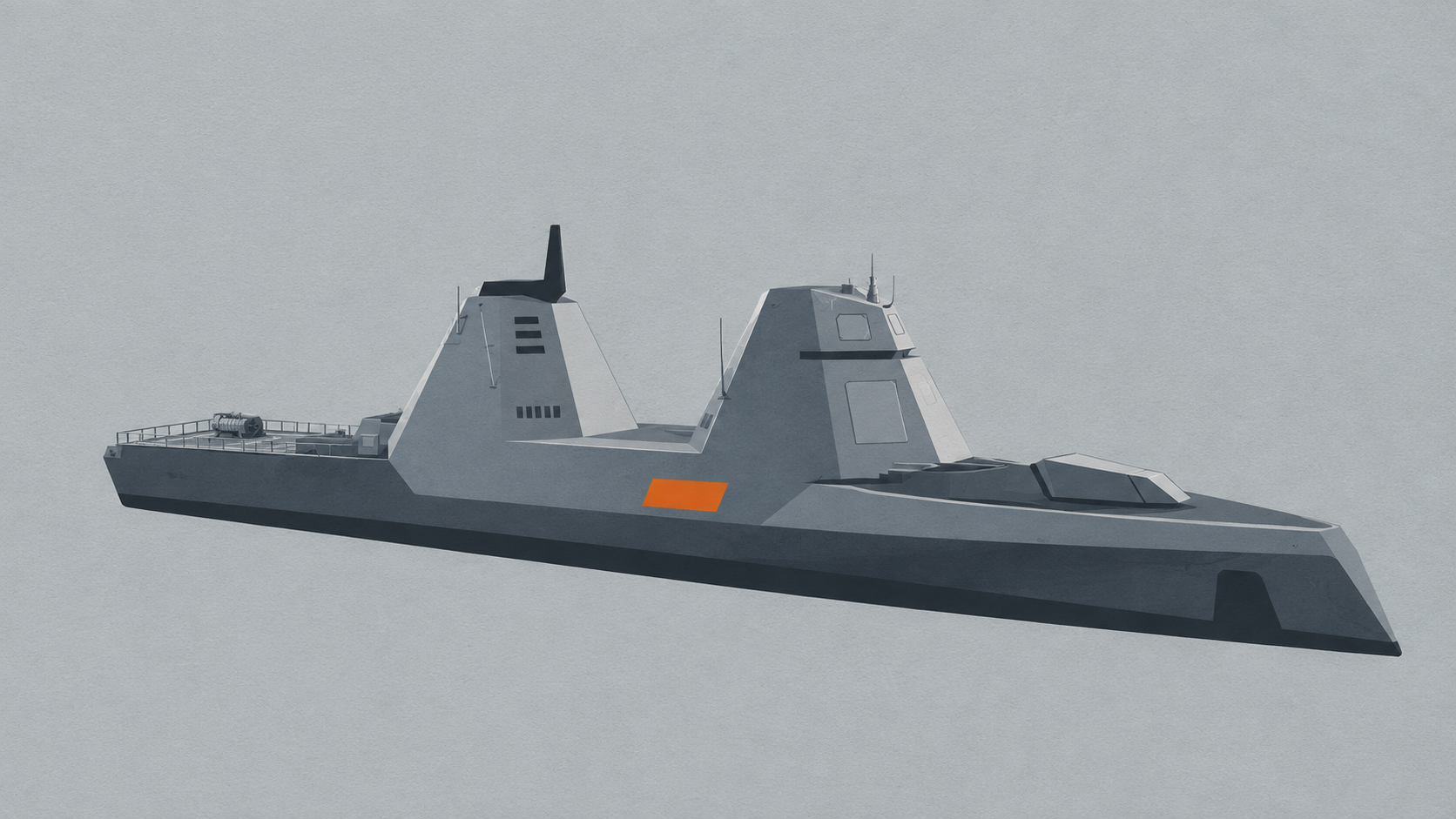
On 4 November 2026 at the Euronaval exhibition in Paris, French shipbuilder Naval Group unveiled the SCX 26 — Surface Combatant for the 2026th decade — a concept vessel that compresses a missile destroyer, a drone carrier and a fleet command centre into a single 170-metre, 10,000-tonne hull. It is a concept, not a programme of record, but the specificity of its design signals where Naval Group believes high-intensity naval warfare is heading by the 2040s.
The most arresting feature is the combination of an electromagnetic railgun and a 100 kW laser weapon system aboard the same platform alongside 96 Sylver vertical launch system cells, expandable to more than 100. Each of those three systems places extraordinary demands on shipboard power. The railgun requires massive stored-energy bursts to accelerate a projectile to hypervelocity. The laser draws continuous high power for effective close-in defence. The VLS magazine supports extended strike operations. Running all three simultaneously — without tripping the ship's electrical architecture — is precisely the kind of problem that has stalled comparable programmes elsewhere.
The power and propulsion question
Naval Group specifies a Combined Diesel-Electric and Gas Turbine (CODLAG) propulsion arrangement, giving the SCX 26 a maximum speed of 30 knots and a range of 8,000 nautical miles. CODLAG configurations offer flexibility by separating propulsion power from hotel and combat-system loads, but the simultaneous peak demands of a railgun firing cycle and sustained laser operation represent an energy-management challenge that the concept does not publicly resolve. That gap — between ambitious armament lists and the unglamorous reality of power budgeting — is where directed-energy programmes have historically stalled.
The SCX 26's design acknowledges the complexity by incorporating an AI-supported combat management system and a UHF radar optimised for ballistic missile defence. If the AI layer is genuinely tasked with arbitrating power allocation across competing weapons and sensors in real time, that is a meaningful architectural commitment. But the research available does not confirm how Naval Group intends to validate that arbitration under combat conditions, and treating a concept briefing as a solved engineering problem would be premature.
The drone-carrier dimension
What distinguishes the SCX 26 from previous destroyer concepts is its explicit identity as a drone platform. A large aft mission bay, served by high-capacity lifts, is designed to deploy aerial, surface and underwater unmanned systems. Alongside the 150 permanent crew, the ship accommodates up to 100 specialists dedicated to drone management and command functions — a staffing ratio that reflects how labour-intensive current uncrewed operations remain, even aboard a vessel designed for the 2040s.
Secondary close-in defence comes from two Rampart multipurpose modular systems integrated with SkyKnight anti-aircraft missiles from Emirati defence partner EDGE — a partnership detail that points toward export ambitions as well as operational requirements.
The hull features two distinct superstructures and a 'flex zone' explicitly reserved for mid-life capability upgrades. In a threat environment evolving as rapidly as today's, designing in physical space for systems not yet specified is arguably as telling as the weapons list itself.
What the concept is really asking
The SCX 26 is Naval Group's argument that the next generation of surface combatants cannot choose between firepower and autonomy — they must carry both, managed by software sophisticated enough to operate under minimal crew oversight across multiple domains simultaneously.
The railgun and laser combination will only work if the power architecture and AI management layer genuinely deliver. Neither is proven at this scale. The 96-plus VLS cells represent a credible and proven strike capacity; the directed-energy systems remain the unresolved variable. What Naval Group has done is frame the design question clearly: the challenge for the 2040s is not whether to put these systems on a ship, but how to make them work together without one pulling the plug on another.
That is a harder question than any single weapons reveal. It is also the right one to be asking now.
Cite this article
Rob Polli. "Sector briefing: Naval Group's SCX 26 packs railgun, lasers and 96 VLS cells into one concept hull." Autonomous Systems Review, 4 Nov 2026. https://autonomoussystemsreview.com/articles/sector-briefing-naval-groups-scx-26-packs-railgun-lasers-and-96-vls-cells-into-o.