Sector briefing: Helsing's Contra system redefines air defense as active pursuit
European AI defense firm Helsing launched the Contra air defense system on 26 October 2026, pairing two autonomous interceptors with a cost structure designed to make mass-drone engagement economically viable for the first time.
The problem Contra is solving
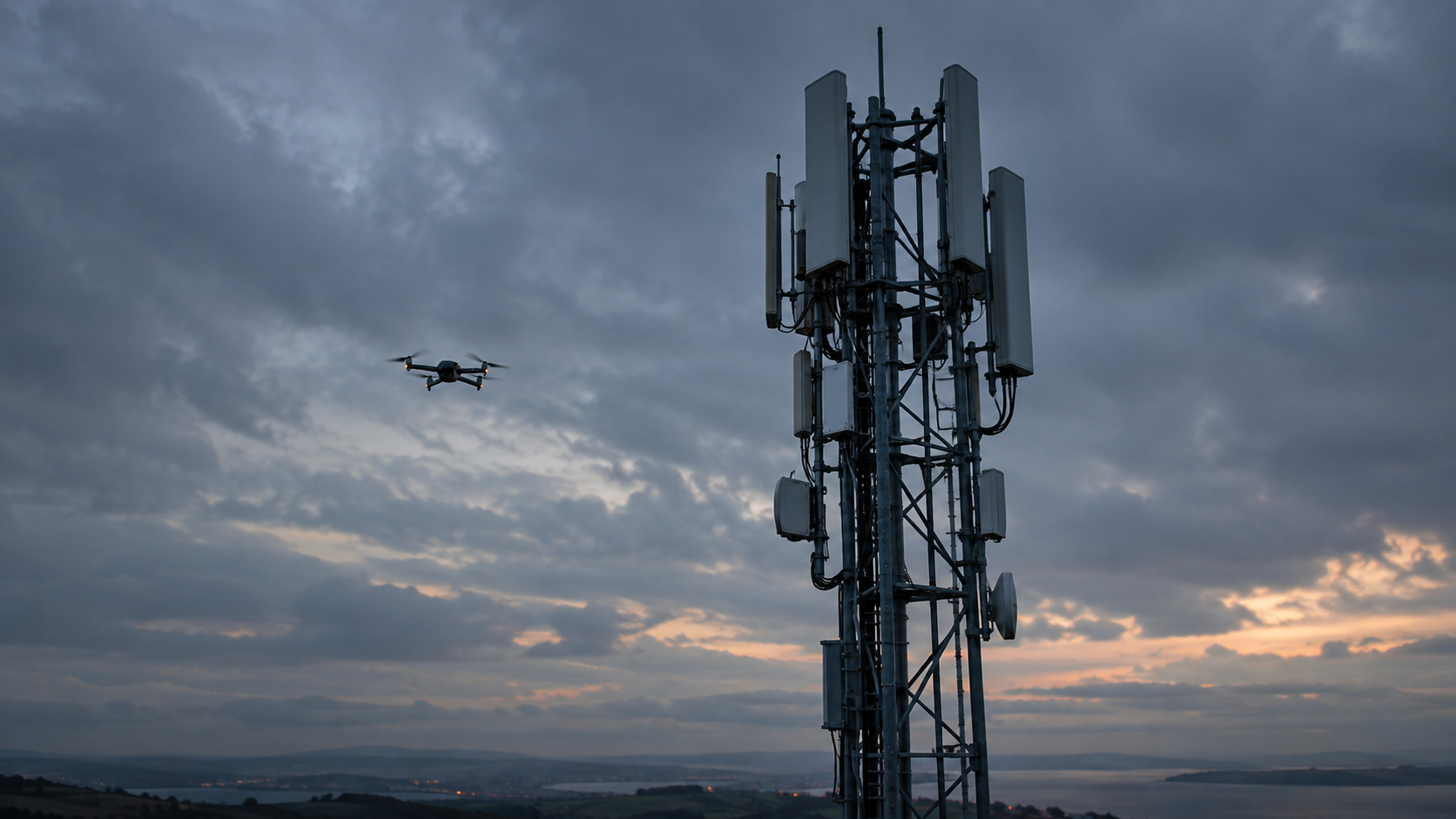
Conventional air defense is built around a perimeter logic: detect, classify, and engage threats as they approach a fixed asset. That model breaks down against mass-casualty drone campaigns. Russia's jet-powered Geran-4 and Geran-5 drones fly fast enough and in sufficient numbers to exhaust both the ammunition stocks and the economics of legacy systems. Shooting a Geran with a Patriot missile — at $4–5 million per round — is not a sustainable response to a $50,000 threat.
Helsingt's answer, unveiled on 26 October 2026, is Contra: an AI-directed air defense architecture that pursues fast-moving drone threats rather than waiting for them to enter a fixed engagement envelope.
Two interceptors, two engagement profiles
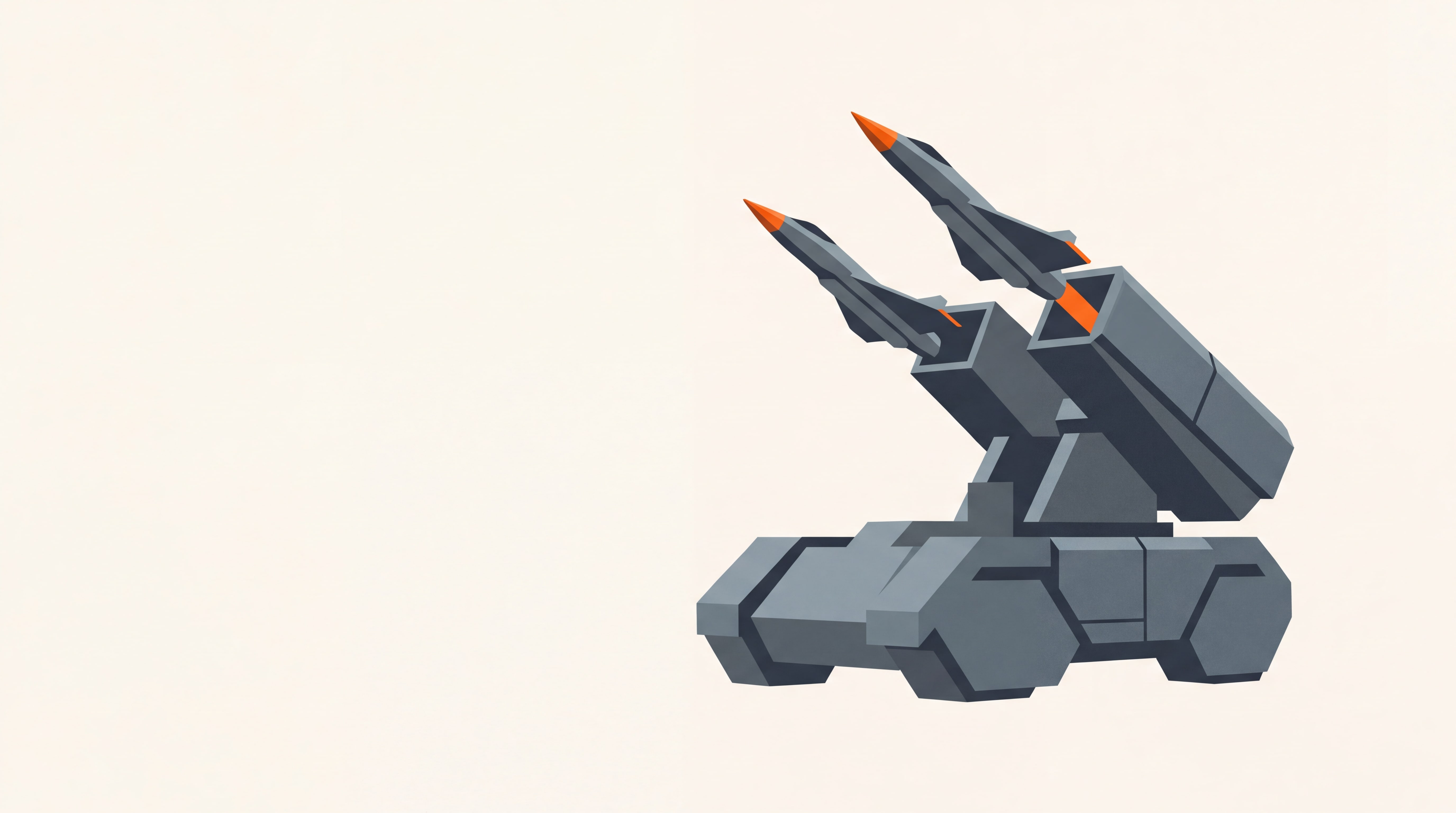
Contra fields two purpose-built missiles. The AD-1 'Inferno' is jet-powered, capable of loitering and swarming, and reaches speeds exceeding 700 km/h — suited to sustained engagements against groups of slower or evasive targets. The AD-2 'Ambush' uses a solid-rocket motor to reach Mach 2.5, approximately 3,000 km/h, for rapid intercepts at high altitude. Both missiles carry a range of at least 20 km and can operate above 9,000 metres. Both are container-launched and use an AI-enhanced radar seeker supported by mid-course guidance from ground stations.
The design split is deliberate. Fast jets like the Geran-4 and Geran-5 require a system that can accelerate into pursuit geometry quickly; swarms require a platform that can loiter, reacquire, and engage sequentially without returning to base.
The cost-exchange argument
The economic case is where Contra departs most sharply from existing options. Helsing has priced both the AD-1 and AD-2 at under $100,000 per interceptor. By comparison, a NASAMS round costs approximately $1 million and a Patriot missile $4–5 million. At those prices, an attacker fielding dozens of Geran drones can impose disproportionate financial cost on a defender using conventional systems.
At sub-$100,000 per shot, the cost-exchange ratio inverts. The interceptor no longer represents a greater financial commitment than the threat it destroys. This matters particularly in attrition-rate warfare, where the volume of engagements over weeks or months accumulates into budget-defining figures.
Helsingt CEO Gundbert Scherf confirmed on 28 October 2026 that the company has already signed its first contract for the Contra system. Full production readiness is targeted for the second half of 2027.
Software-defined architecture and integration
Contra is designed as an open-architecture system. As of 29 October 2026, Helsing has demonstrated integration with third-party effectors including lasers, guns, and net-based systems — positioning Contra as a coordination layer within multi-layered air defense stacks rather than a standalone replacement for existing platforms.
The AI-enhanced radar seeker is central to this. Where a traditional missile relies on fixed engagement logic, Contra's onboard processing is intended to maintain target discrimination and lock during dynamic engagements — handling the classification load that would otherwise require human-in-the-loop confirmation. This is the architecture that makes active pursuit feasible: the system can chase a maneuvering target without waiting for operator input on each course correction.
Supply chain and production
Production will take place at Helsing's RF-1 facility in Southern Germany. The supply chain is structured to exclude both Chinese components and U.S. ITAR-restricted materials — a deliberate positioning that gives European customers procurement flexibility and reduces dependency on non-European export controls.
This supply chain discipline is as commercially significant as the performance specifications. European defense procurement has become acutely sensitive to technology access restrictions; an interceptor produced entirely within European supply chains removes a category of political and logistical risk that ITAR-bound systems carry.
Practical implications
The shift Contra represents is structural. Air defense has historically been a reactive discipline. The Contra system — with pursuit-capable interceptors priced below the cost of the threats they engage, backed by AI discrimination at the seeker, and integrated into broader effector networks — moves the operational model toward active interception at scale. Whether that model translates into operational effectiveness at the volumes required will depend on production ramp-up and the performance of the AI seeker under operational conditions. The first contract signed and the 2027 readiness timeline will provide the first real test.
Cite this article
Rob Polli. "Sector briefing: Helsing's Contra system redefines air defense as active pursuit." Autonomous Systems Review, 1 Nov 2026. https://autonomoussystemsreview.com/articles/sector-briefing-helsings-contra-system-redefines-air-defense-as-active-pursuit.