Every generation gets the environmental villain it deserves. The eighties had the chainsaw in the Amazon. The nineties had the whaling ship. Britain in the 2010s had fracking, a word that sounded so much like swearing it practically ran its own campaign.
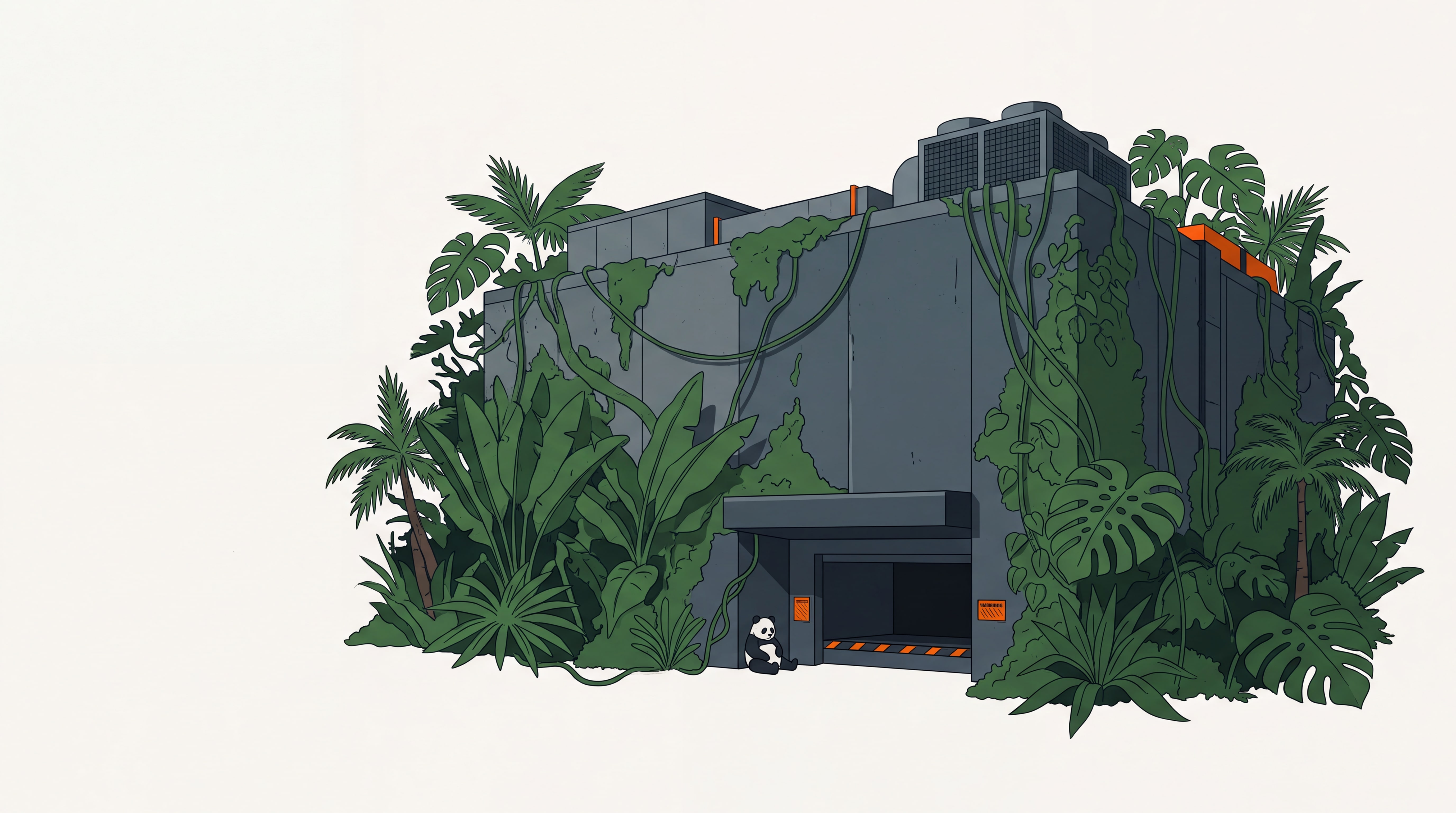
Now we have the data centre. It's a windowless warehouse the size of a village, humming on the edge of a town that never asked for it, drinking the water and eating the electricity, owned by someone worth more than the county.
As causes go, it's perfect. You can't see an algorithm. You can see a shed.
On Tuesday, America saw it. In a CNBC voter poll, 56% of voters said data centres were a crucial or major factor in how they voted. Campaigns spent more than $380 million on TV ads that mentioned them. Texas, the state that wanted to be the AI capital of the world, elected a governor who has pledged a moratorium on data centre construction in a state that holds more than a quarter of America's planned capacity to 2030. This isn't a one-party fad either. Before he lost, Greg Abbott had already paused permits for new data centres pending an audit.
The markets took about 48 hours to do the maths. On Thursday the Nasdaq fell 5.5% and closed in correction, and roughly $2.5 trillion in market value vanished on fears that the midterm results would put the brakes on the AI buildout. Elon Musk, ever the optimist, posted that "data centers in space" were looking pretty appealing right now. Planning permission is famously relaxed in orbit.
The cow was always you
Google had already had its own week. Alphabet shares fell around 12% on 29 October, wiping out about $500 billion, after capital spending topped $51 billion in a quarter and free cash flow went negative for the second quarter running. Translation: building the future is ruinously expensive, and the bill has to be sent to someone.
For twenty years the deal with Big Tech was simple. The product was free and you were the product. Search, email and maps were all paid for by watching you. AI changes the arrangement. You now pay a subscription to be milked, and if you live near one of these sheds, you may pay again on your electricity bill. Doubts about data centres have merged with the wider fight over the cost of living, and in Texas, ranchers told candidates they feared for their dwindling water supplies. The protesters aren't hysterical. They've read their bills.
What almost nobody outside the industry understands is that infrastructure isn't a one-off cost. It grows with success. Every product that goes viral needs more compute the moment it does. Popularity, in AI, is an invoice.
Who's holding the placard?
In 2014, NATO's then secretary general claimed Russia was quietly encouraging Europe's anti-fracking movement to keep the continent hooked on its gas. No evidence was ever made public. But the question behind it outlived the claim: when a cause is this easy to rally behind, who else benefits?
Nobody needs to bankroll the data-centre backlash. Household power bills are doing that job for free. Still, if America builds slower, somewhere else builds faster, and the countries with fewer planning objections won't be sending flowers.
The trap
Here's the twist. Over the past two years AI has let ordinary people build their own escape routes from the giants. Small publishers launch their own sites, freelancers build their own tools, and one-person studios do the work of a department. All of it runs in the same sheds.
Block the sheds and compute gets scarcer. Scarce things get pricier. Damage the big players and they won't absorb the loss out of kindness. They'll pass it down the line, and they'll do it with a straight face. The alternatives AI helped people build get more expensive to run, just as everyone has come to depend on them.
So the user pays on both sides of the argument. You pay on the power bill if the data centre gets built, and on the subscription if it doesn't. You pay most of all if you were one of the people using it to get out from under Big Tech in the first place.
The rainforest got its campaign. The pandas got their T-shirts. This time the panda gets saved and you buy the bamboo.
Cite this article
Rob Polli. "The New Rainforest." Autonomous Systems Review, 6 Nov 2026. https://autonomoussystemsreview.com/articles/the-new-rainforest.