Profile: Chris Urmson, the man who has been building self-driving since before it was an industry
He won the DARPA challenge, built what became Waymo, then left to bet that the future of autonomy was freight, not taxis. Two decades in, Aurora's driverless trucks are running — and Urmson's long game is finally being marked.
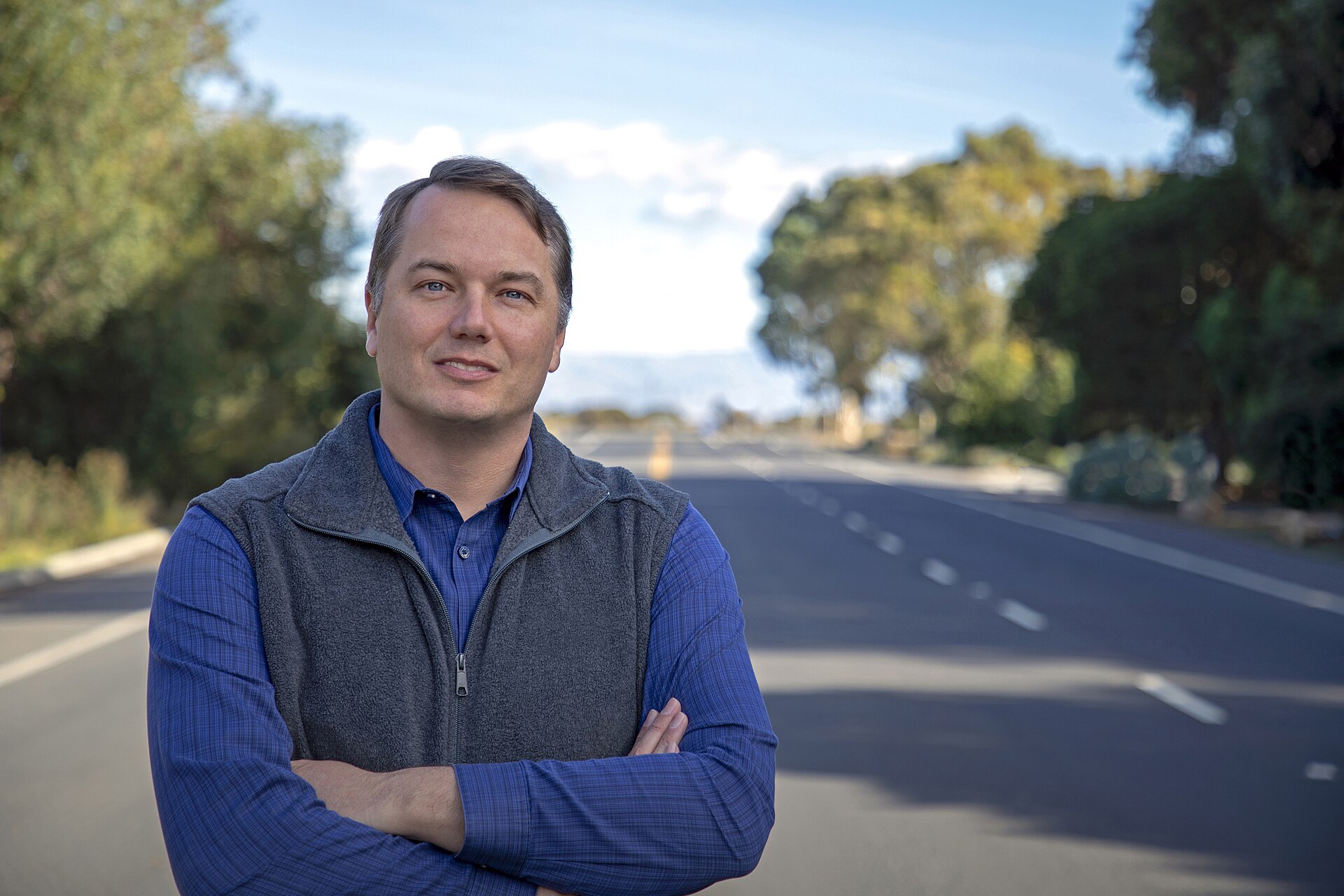
Most people running autonomous-vehicle companies in 2026 entered the field after it became obvious. Chris Urmson was there when it was a curiosity — a robot trying to cross a desert — and he has been at it, without interruption, for over twenty years. That longevity is the single most important fact about Aurora Innovation, and it explains both the company's discipline and its patience.
From the desert to Google
Urmson's origin story is the sector's origin story. A Canadian roboticist with a PhD from Carnegie Mellon, he served as director of technology for CMU's teams in the DARPA Grand and Urban Challenges — the Pentagon-funded races that kick-started modern self-driving — finishing second in 2005 and winning in 2007. For Urmson the appeal started as pure engineering novelty.
> [QUOTE] "The idea of having a robot drive at high speed across the desert just seemed like a neat, fun problem." — Chris Urmson, to Index Ventures
By the end of those races, the novelty had become a conviction that the technology could reshape the roads. From 2009 to 2016 he led Google's Self-Driving Car Project as its CTO, growing it from lidar-topped test cars crawling round an office park into the millions-of-miles programme that spun out as Waymo. He gave a 2015 TED talk framing autonomy not as a gadget but as mobility for the blind, safety for the distracted, and independence for the elderly — the moral case he has repeated ever since.
The contrarian bet
Then, in 2017, he left the company he had helped build into the sector's flagship — and made a bet that looked eccentric at the time. While the rest of the industry chased the glamour of the urban robotaxi, Urmson co-founded Aurora with Sterling Anderson, who had led the Tesla Model X and Autopilot, and pointed the company at trucks.
The logic was pure operational-design-domain reasoning, years before the phrase was fashionable. Highway freight is a more constrained problem than city driving — fewer pedestrians, no complex intersections, structured lanes — and the economics are enormous: long-haul trucking runs into a wall of driver shortages and hours-of-service limits that a machine simply ignores. A driverless truck can run the routes no single legal human driver can. Urmson bet that autonomy would pay for itself in freight before it ever turned a profit in taxis.
The long game, marked
Nearly a decade on, that bet is being scored in public. Aurora launched driverless operations in 2025 and, by mid-2026, its trucks had run nearly 440,000 driverless miles on Texas and Arizona corridors with a clean safety record — while the company posted the heavy losses that scaling this technology demands. Urmson's framing of the milestone is characteristically incremental.
> [QUOTE] "Delivering one driverless truck will be monumental. Deploying thousands will change the way we live." — Chris Urmson
That sentence captures the man. Where the sector traffics in exponential promises, Urmson talks in ones and thousands — the difference between a demonstration and a transformation, and the years of unglamorous engineering in between. He is described by those who've backed him as fiercely competitive under a layer of Canadian mildness, and it shows in Aurora's habits: the published mileage, the safety record, even a public livestream of the trucks operating. This is a company run by someone who has watched the field over-promise for two decades and has structured his own to under-claim.
The test ahead
The questions now are commercial, not technical. Can Aurora remove the ride observer and scale to hundreds of trucks on schedule? Does its software-margin business model survive contact with carriers? Can it reach positive cash flow before the losses matter? Urmson has outlasted nearly everyone who started when he did — the Grand Challenge cohort has largely dispersed into the industry he helped create. Whether patience and discipline convert into a profitable business is the one part of the self-driving problem he hasn't yet solved. After twenty years, he has earned the benefit of the doubt on the engineering. The market will decide the rest.
Cite this article
Rob Polli. "Profile: Chris Urmson, the man who has been building self-driving since before it was an industry." Autonomous Systems Review, 30 Jul 2026. https://autonomoussystemsreview.com/articles/profile-chris-urmson-the-man-who-has-been-building-self-driving-since-before-it.
![Aurora plans to deploy its second-generation driverless trucks across its commercial network, which currently encompasses 10 driverless routes throughout the U.S. Sun Belt. [Credit: Aurora]](https://res.cloudinary.com/dhuodddzw/image/upload/v1786100569/Aurora_ad2_jskuom.jpg)