NVIDIA's Humanoid Push Depends on Chinese-Made Dexterous Hands
The leading AI compute provider for humanoid robotics is building its reference platforms around end-effectors manufactured in China. That division of labour — US silicon for cognition, Chinese hardware for manipulation — defines where the supply chain sits today and what it means for integrators choosing sides.
The Problem Buyers Are Not Being Asked to Consider
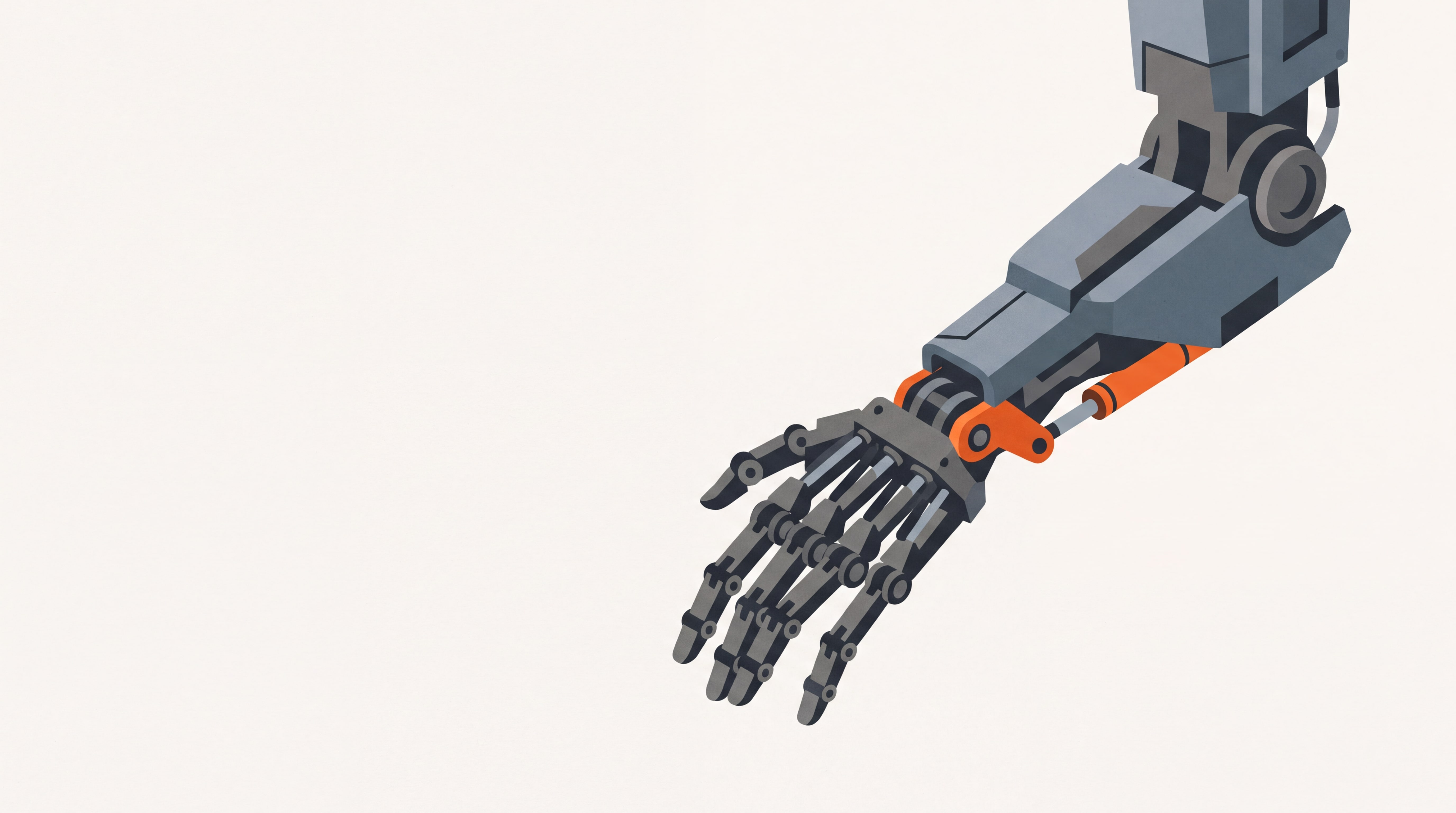
Humanoid robotics procurement conversations tend to focus on AI software, compute horsepower and overall platform cost. The dexterity layer — specifically, who makes the robotic hands and where — receives comparatively little scrutiny. That is an oversight, because the hands are where the commercial value of a humanoid is largely realised, and the supply chain for high-dexterity end-effectors is concentrating rapidly in China.
The clearest evidence of this dynamic sits inside NVIDIA's own reference architecture. The company that provides the AI compute and software stack underpinning most serious humanoid programmes is, in parallel, formalising partnerships with Chinese and China-adjacent hardware manufacturers to supply the dexterous hands those platforms require.
The Architecture Behind the Dependency
On October 21, 2026, NVIDIA and Agile Robots launched the Agile One SN at GTC Berlin, a research humanoid built around NVIDIA's Jetson Thor computing module and Isaac GR00T software. The platform totals 71 degrees of freedom. Twenty of those DOF come from the Wuji Hand 2, a direct-drive hand developed by Chinese startup Wuji Tech. Pre-orders for the Wuji Hand 2 opened on October 16, 2026, at a price range of $14,600 to $19,500 per unit — a figure that makes high-dexterity manipulation accessible at a price point that European and US hand manufacturers have not matched at scale.
Stanford University and ETH Zurich are confirmed early adopters of the NVIDIA and Agile Robots system, with deliveries scheduled for early 2027. When two of the world's foremost robotics research institutions select a platform, they are also selecting its supply chain.
Separately, NVIDIA's June 2026 reference platform paired the Unitree H2 Plus humanoid body with the Sharpa Wave (W01), a 22-DOF tactile hand from Sharpa, a company operating across Singapore and Shanghai. The Sharpa Wave supports a 40kg payload and is priced at approximately $50,000. Sharpa's Droid D01 platform, unveiled September 28, 2026, achieves end-effector speeds exceeding 10.5 m/s using the same 22-DOF tactile hand architecture. These are not prototype specifications; they are production-relevant figures that define what integrators can deploy.
Unitree itself updated its pricing in October 2026. The H2 Plus, configured with tactile five-finger hands, reaches up to $240,000 per unit. The G1 EDU Ultimate, combining high-dexterity hands with high-compute capabilities, is priced at $73,900.
The Pattern Extends Beyond NVIDIA
Meta's humanoid prototype, internally designated Max and revealed on October 31, 2026, was built in collaboration with Shanghai-based Fourier Intelligence. It runs on NVIDIA's Jetson Thor chip. The same compute, the same geographic split of cognitive and mechanical responsibility.
The Chinese-manufactured hardware advantage is not purely about cost, though cost is significant. It reflects a concentrated manufacturing and engineering ecosystem that has iterated rapidly on mechanical dexterity — joint design, actuator selection, tactile sensing integration — while US and European firms have concentrated resources on AI, simulation and software. Neither side has yet produced a fully vertically integrated humanoid that leads on both dimensions simultaneously.
The commercial validation is beginning to materialise. Japan Airlines began real-world testing of the Unitree G1 for cargo handling at Haneda Airport in May 2026. That is an operational trial, not a laboratory demonstration, and it signals that the performance characteristics of Chinese-manufactured humanoid hardware are sufficient for industrial deployment.
What This Means for Buyers and Builders
The silicon-mechanical divide has direct implications for procurement teams, systems integrators and asset owners evaluating humanoid platforms.
**Supply chain exposure is already present.** Any platform built on NVIDIA's current reference architecture incorporates Chinese-manufactured end-effectors. Organisations with supply chain provenance requirements — driven by regulatory, contractual or geopolitical considerations — need to assess this now, before deployment commitments are made.
**The cost gradient is real and consequential.** A Wuji Hand 2 at $14,600 to $19,500 versus a high-end tactile hand at $50,000 represents a meaningful cost-of-system variable. For integrators building multi-unit deployments, that delta compounds quickly. The lower-cost Chinese options are not lower-specification in the ways that matter most for dexterity; the Wuji Hand 2's 20-DOF direct-drive architecture is architecturally competitive with anything produced outside China at its price point.
**Reference architecture adoption accelerates lock-in.** When institutions like Stanford and ETH Zurich adopt a platform for research, the software, datasets and training pipelines developed on that hardware create downstream dependencies. Commercial operators who follow the research pipeline — as many do — inherit those supply chain relationships.
**The gap may narrow, but not quickly.** Western investment in dexterous end-effector manufacturing is increasing, but the engineering head start, manufacturing infrastructure and iterative velocity that Chinese firms have accumulated is not closed by capital alone. Procurement teams should plan for Chinese-manufactured end-effectors to remain the dominant option in cost-competitive humanoid platforms for the foreseeable near term.
The fundamental question for decision-makers is not whether Chinese-made hands work — the evidence from platform specifications and early operational deployments indicates they do. The question is whether the organisations deploying these systems have assessed the supply chain, regulatory and strategic implications of that dependency before they scale.
Cite this article
Rob Polli. "NVIDIA's Humanoid Push Depends on Chinese-Made Dexterous Hands." Autonomous Systems Review, 3 Nov 2026. https://autonomoussystemsreview.com/articles/nvidias-humanoid-push-depends-on-chinese-made-dexterous-hands.