Tesla Converts Fremont Car Lines to Humanoid Robot Production
With Model S and X assembly dismantled in 46 days, Tesla's Fremont factory now targets one million Optimus units annually — a manufacturing pivot with few precedents in the automotive industry.
The Floor Where Cars Used to Be Built
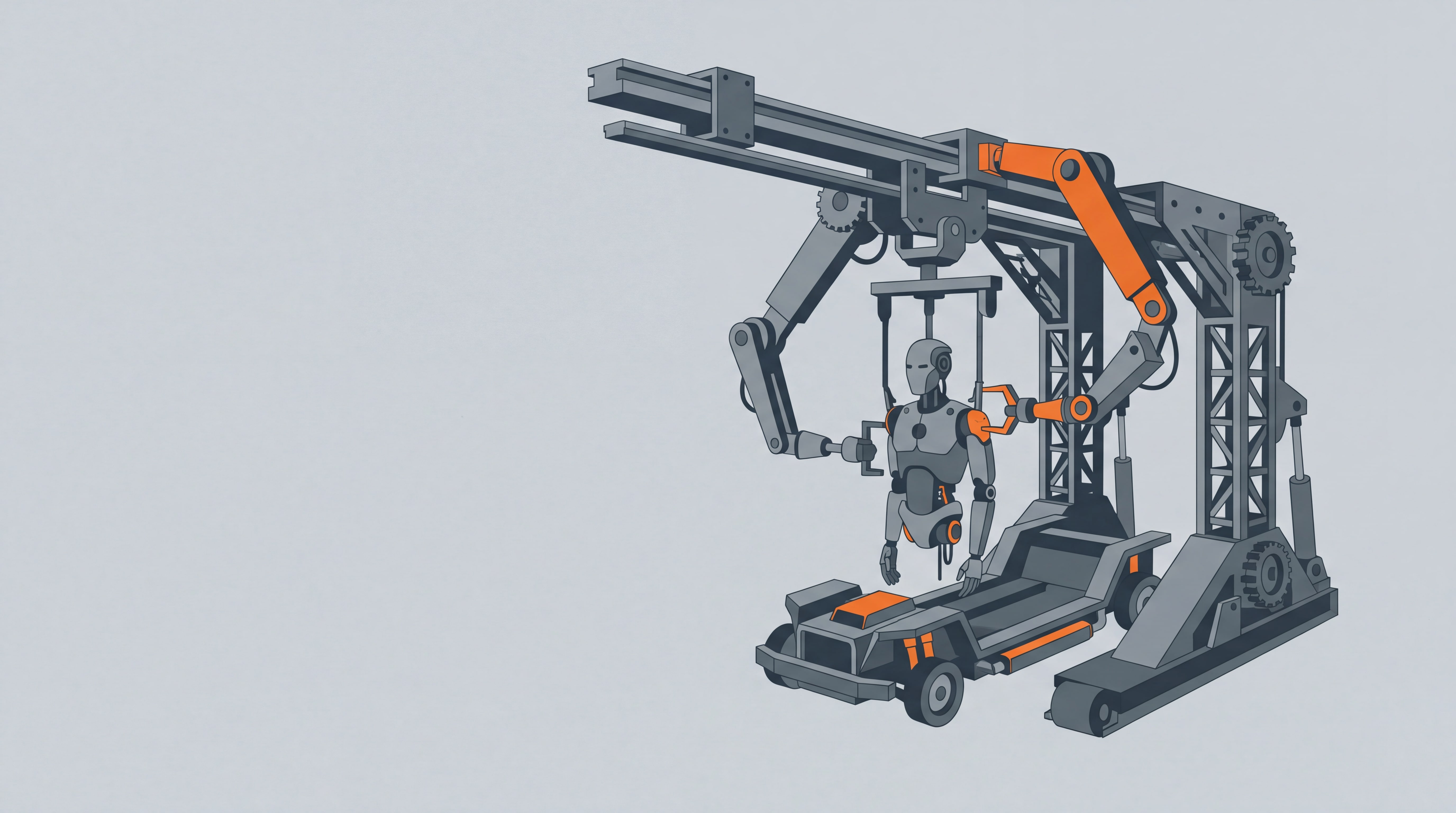
On the Fremont factory floor where Model S and Model X vehicles rolled off the line for over a decade, the equipment is gone. The automotive tooling that once defined that space was torn down in 46 days — a decommissioning timeline that underscores the urgency Tesla attached to the transition. In its place, as of late October 2026, a humanoid robot production line is operational, configured for an annual output target of one million Optimus units.
That transition, formally completed when Tesla ended Model S and Model X production at Fremont on 10 May 2026, is arguably one of the most significant repurposings of a major automotive facility in recent memory. The space freed by retiring two of the company's longest-running vehicle programmes has been absorbed into what Tesla is now calling its humanoid manufacturing operation — and the speed of conversion has drawn attention from engineers and operations managers well beyond the robotics sector.
The direct answer to the question the industry has been asking: Tesla is producing Optimus Gen 3 robots at Fremont now, with early production confirmed on 21 October 2026, and external shipments are targeted for the end of 2027.
What Was Traded Off
Replacing a mature car production line with robot assembly is not a neutral swap. The Model S and Model X lines represented high-revenue, low-volume output — vehicles that carried significant margin per unit. What replaced them is a process still being refined, targeting a product that is not yet commercially shipped.
The trade-off is deliberate but consequential. The Fremont robotics line is designed around targets that are aspirational by any measure: one million units annually at Fremont, with a planned ten million units per year at Giga Texas in the longer term. Neither figure represents current output. What exists today is early-stage production of the Gen 3 platform, alongside an internal deployment programme called Optimus Academy, which Tesla launched on 23 October 2026.
Optimus Academy is central to understanding the manufacturing rationale. Rather than shipping robots to external customers while the AI system is still being refined, Tesla is deploying between 10,000 and 20,000 Optimus units within its own facilities — including Fremont — to generate the training data needed for reliable task generalisation. As of January 2026, over 1,000 Optimus units were already operational on the Fremont floor performing autonomous part-kitting and battery sorting. The internal deployment has since scaled considerably.
This approach reflects a hard problem in humanoid robotics that no amount of simulation fully resolves: robots need real-world variability to learn how to handle it. By making its own factories the testbed, Tesla is attempting to close the gap between controlled demonstration and reliable deployment — while also generating production data that informs hardware iteration.
The Machine Itself
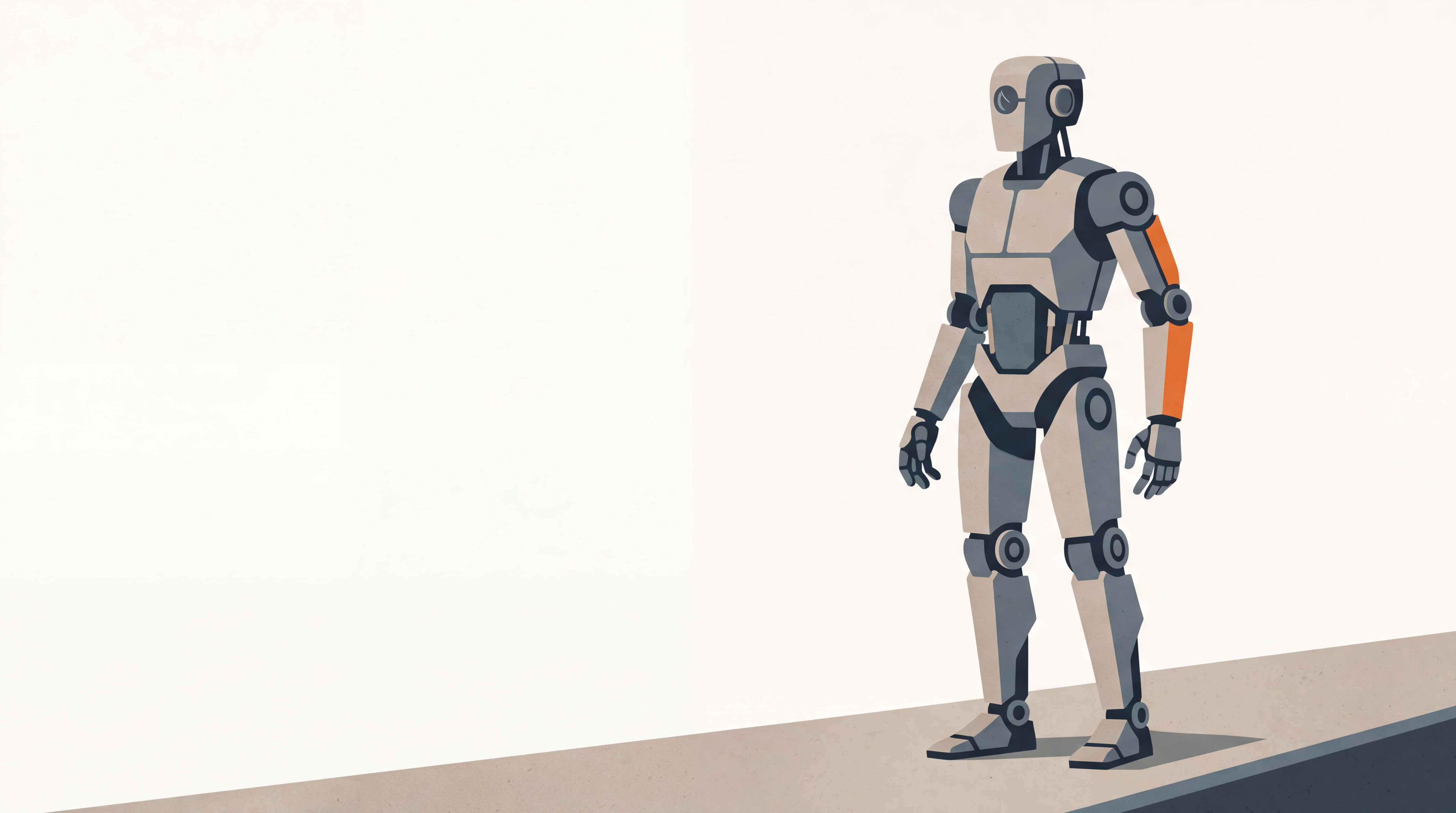
The Optimus Gen 3 platform represents a meaningful hardware step. Each hand carries 22 degrees of freedom, a figure that positions the gripper system at the more capable end of the current humanoid field. The robot walks at up to 8 km/h and carries a 2.3 kWh battery, rated for eight hours of runtime — a specification directly relevant to shift-length industrial use cases. An eight-hour runtime is the threshold at which a humanoid can theoretically complete a full working shift without mid-cycle interruption.
For operations managers evaluating whether the hardware could slot into existing warehouse or assembly workflows, that runtime figure matters more than walking speed. Thermal management over an eight-hour continuous cycle is a non-trivial engineering challenge — sustained actuation generates heat at the joints, drives, and compute stack — and the degree to which Gen 3 addresses that in continuous-use conditions will only become clearer as internal deployment data accumulates.
On the software side, Optimus Gen 3 integrates with xAI's Grok large language model for higher-level reasoning tasks. The challenge of porting the reasoning and decision-making logic from Tesla's Full Self-Driving stack — which operates in a constrained, rules-dense domain — to a humanoid operating in unstructured physical space is substantial. FSD handles a defined set of variables at speed; a factory robot must manage an effectively open-ended set of object interactions, force thresholds, and task sequences. Optimus Academy's internal deployment is, in part, an attempt to generate the data needed to bridge that gap.
The Reservation Question
At The Humanoids Summit on 30 October 2026, industry expert Modar Alaoui stated that Tesla would open Optimus reservations in December 2026. Within hours, Elon Musk replied to the claim on X with a single word: 'No.'
The exchange is instructive. It confirms both that external parties are watching the commercial timeline closely, and that Tesla is not yet prepared to commit to a near-term consumer or commercial reservation window. Musk's own stated timeline for external shipments is the end of 2027 — a date that gives the company over a year to continue internal testing under Optimus Academy before units leave the building.
Pricing signals have been provided, if not confirmed. Tesla's long-term target for Optimus sits under $20,000 at scale. Early commercial units are expected to be priced between $20,000 and $30,000. Whether the eventual sales structure takes the form of an outright purchase, a Robot-as-a-Service subscription model, or some combination of both has not been publicly defined. The reservation contract terms — if and when they materialise — will be closely read by procurement teams and legal departments alike, particularly given the open questions around liability for humanoid robots operating in both industrial and, eventually, consumer environments.
Why the Manufacturing Pivot Matters Beyond Tesla
The conversion of the Fremont Model S/X line is not simply a Tesla story. It is an early data point in a larger question the manufacturing sector will face with increasing regularity: at what point does automotive-grade production infrastructure become more valuable as a humanoid robot factory than as a vehicle factory?
'Tesla is positioning Optimus not just as a tool for its own factories, but as a future mass-market consumer product,' as the company's own communications make clear — and the Fremont pivot is the physical evidence of that positioning.
For robotics integrators and operations managers, the practical near-term question is different from the long-term strategic one. In the near term, the question is whether Optimus Gen 3, once external shipments begin, will be offered with the service infrastructure, software support, and safety certification that industrial deployment requires. The supply chain for specialised humanoid components — including custom harmonic drives and tactile sensing systems — will need to scale in parallel with production ambitions, and that supply chain is not yet proven at the volumes Tesla is targeting.
The competitive landscape for humanoid operating systems is also emerging as a distinct strategic question. Whether Tesla will license the Optimus software stack to third parties — or keep it proprietary — will shape the broader ecosystem. A closed system maximises Tesla's control and data advantage; an open or licensed model could accelerate adoption across the sector.
What is already clear is that the 46-day teardown of a major automotive line, and its replacement with a humanoid production facility, represents a commitment that is difficult to walk back. Tesla has made a physical and financial bet on the humanoid category. The rest of the industry is watching how quickly the internal data from Optimus Academy translates into a robot that can be handed over to someone else's factory floor.
Cite this article
Rob Polli. "Tesla Converts Fremont Car Lines to Humanoid Robot Production." Autonomous Systems Review, 31 Oct 2026. https://autonomoussystemsreview.com/articles/tesla-converts-fremont-car-lines-to-humanoid-robot-production.