Explainer: why a tractor cracked autonomy before your taxi did
Driver-optional farm machines are working fields at Level 4 today, years ahead of urban robotaxis. The reason isn't better technology — it's a fundamentally easier problem, and understanding why explains the whole sector.
Here is a fact that surprises people: you can buy a tractor today that ploughs a field with nobody in the cab, while a robotaxi still fights for permission to turn left in San Francisco. Agricultural autonomy is quietly years ahead of the road, and the gap is not about engineering talent or funding. It is about the problem itself.
The operational design domain is everything
Every autonomous system is defined by its ODD — the operational design domain, the set of conditions under which it is designed to work. The single most important thing to understand about any autonomy claim is that difficulty scales with the ODD, not with the sophistication of the machine. A field is a benign ODD. A city is a hostile one.
Consider what a row-crop tractor faces versus a taxi. The field is private property, so the tractor is not sharing space with unpredictable members of the public. It has no pedestrians, no cyclists, no oncoming traffic, no traffic lights to interpret, no emergency vehicles to yield to, no ambiguous hand signals from a police officer. The environment is largely static and known in advance — the field's boundaries, obstacles and rows can be mapped before the machine ever moves. Speeds are low. And the consequences of confusion are forgiving: a tractor that encounters something it doesn't understand simply stops and messages the farmer, who is not standing in a crosswalk waiting to be hit.
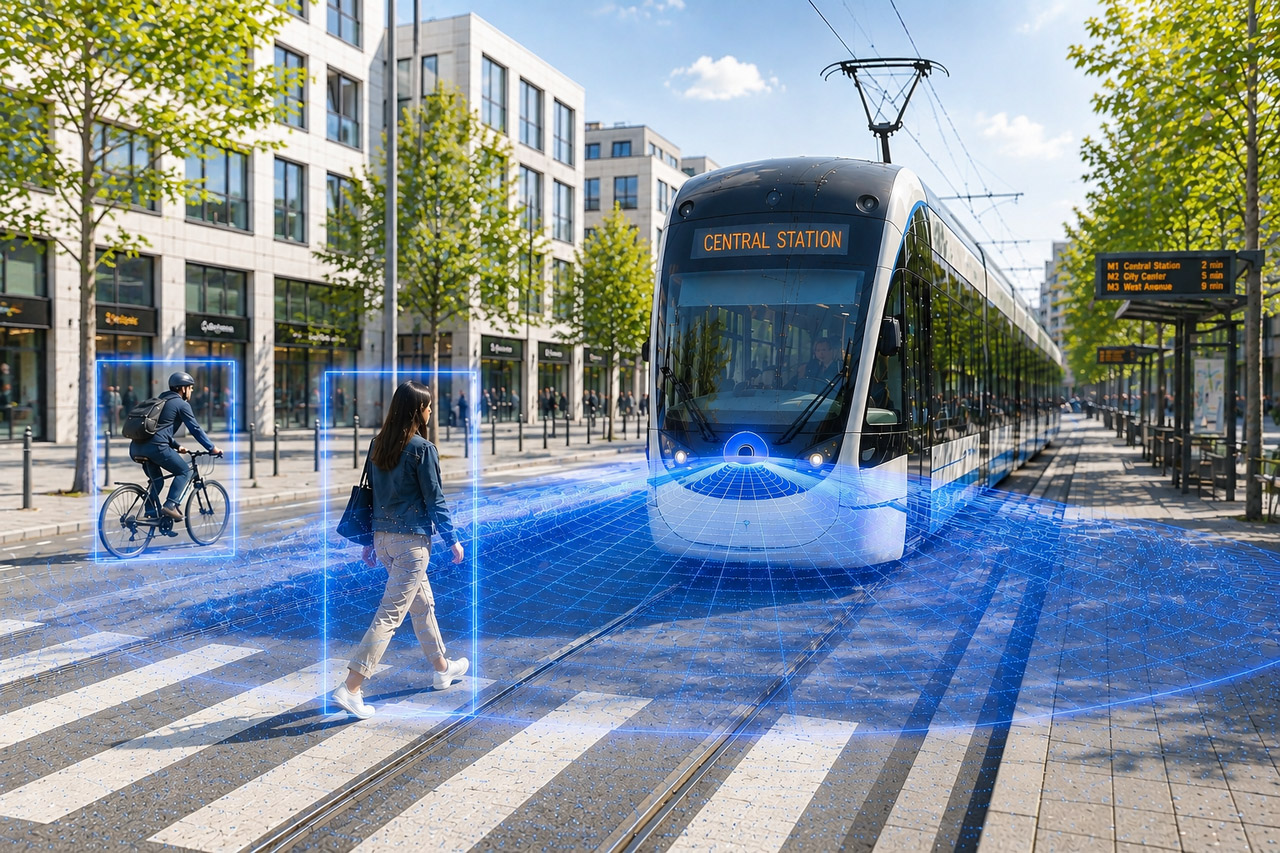
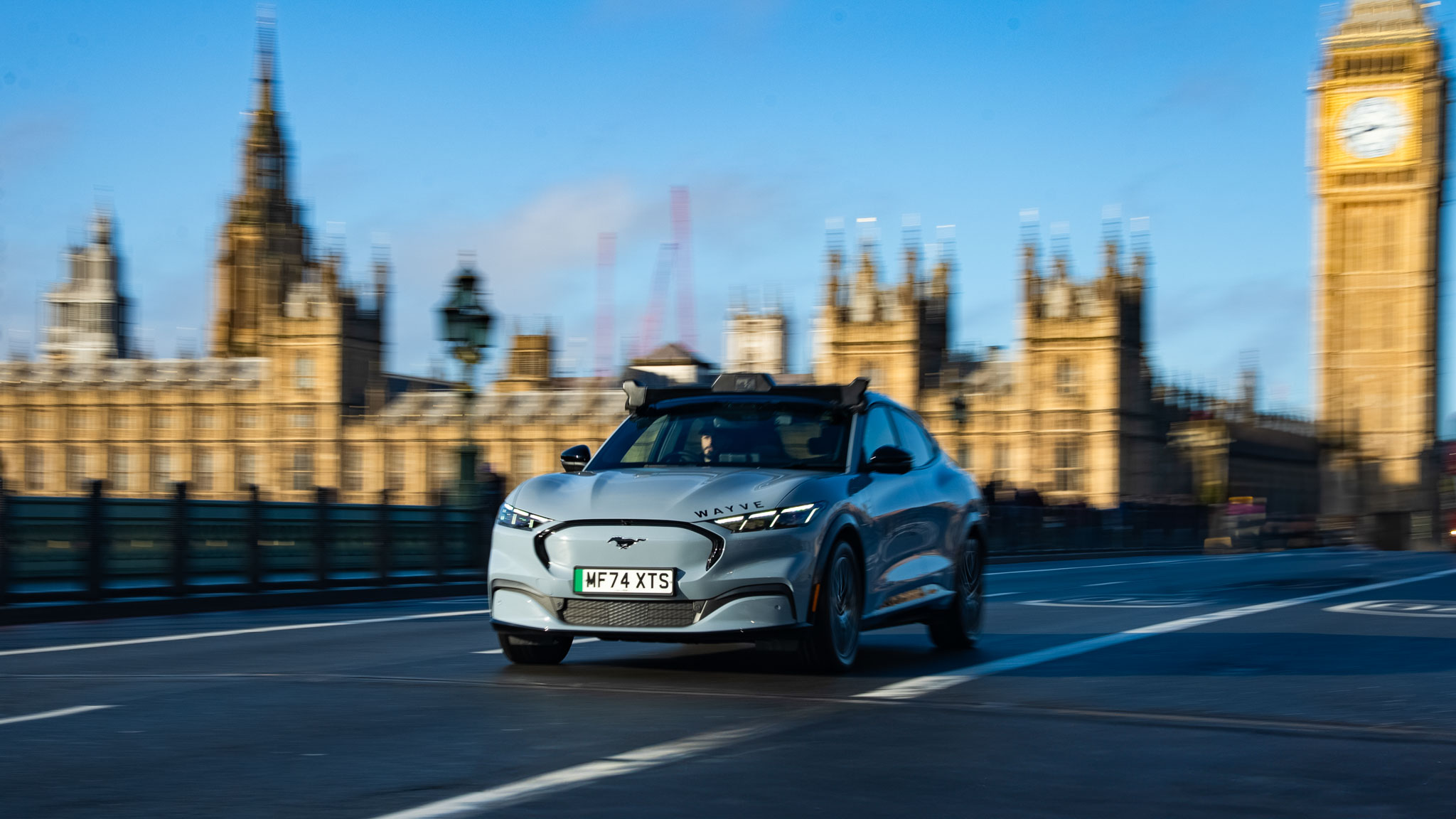
A robotaxi enjoys none of this. Its ODD is the open city — every actor, every weather condition, every improvised human behaviour, at speed, with lives in immediate proximity. The same autonomy stack that is trivially safe in a field would be lethal downtown, because the domain, not the software, sets the difficulty.
What the tractor actually does
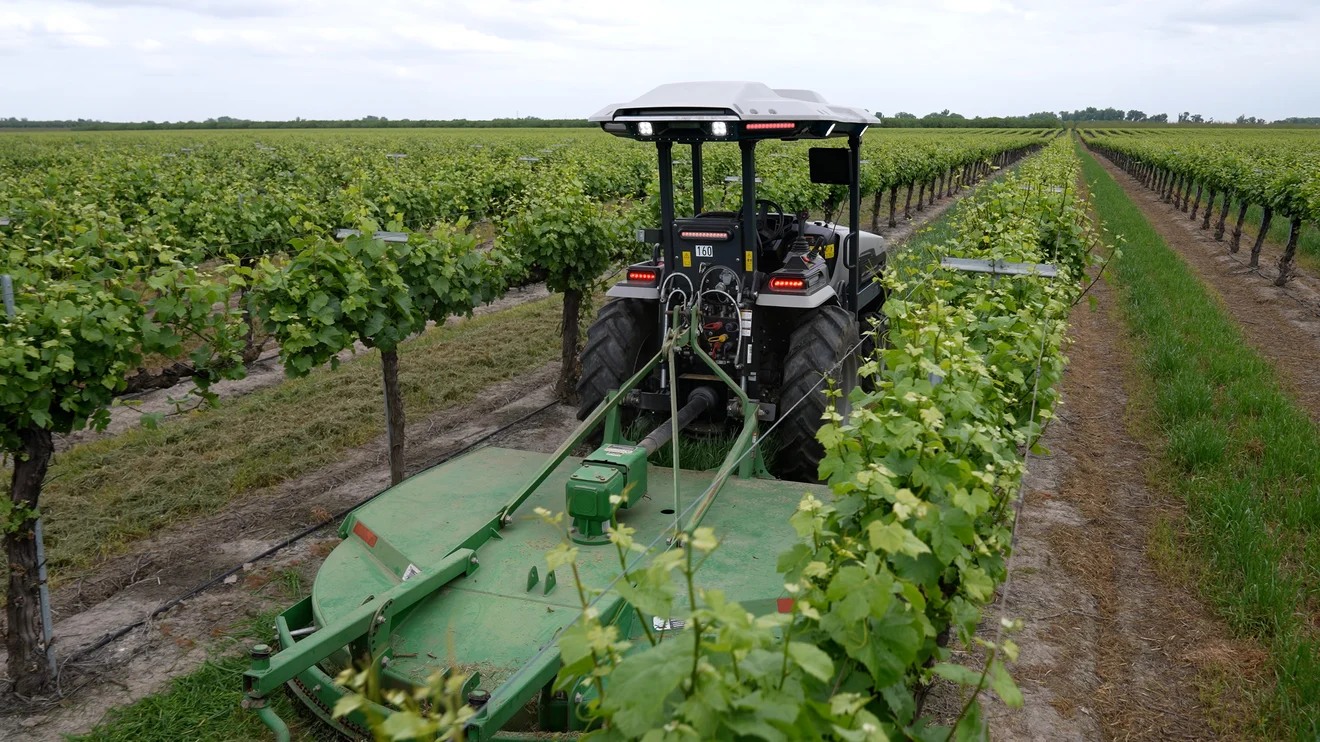
The architecture reflects the easier problem. John Deere's second-generation system — built on computer-vision company Blue River Technology (acquired 2017) and autonomous-navigation firm Bear Flag Robotics (2021) — uses a ring of cameras giving 360-degree coverage, with a satellite GPS receiver for precision guidance. The division of labour is instructive: GPS and a pre-defined field map dictate the boundaries, guidance lines and the job to be done, while the onboard vision system handles the real-time part — staying on line, gauging depth, and stopping for obstacles it wasn't told about.
That is a system that primarily executes a known plan in a mapped space, with perception as a safety overlay. A robotaxi must build and revise its plan continuously in an unmapped, adversarial world. These are different classes of problem wearing similar sensors.
The one genuinely hard part: perception at the plant
Where agricultural autonomy is doing frontier work is not driving — it is seeing. Deere's "See & Spray" uses computer vision to distinguish a weed from a crop plant at speed and fire herbicide only at the weed, cutting chemical use dramatically. That is real, difficult machine vision with direct economics attached, and it is where the sector's hardest AI actually lives. Weeding robots and selective harvesters face the true challenge: manipulation and fine discrimination in an unstructured natural environment, which is why picking delicate crops remains far less solved than driving the tractor that carries the picker.
The lesson that generalises
For anyone assessing an autonomy pitch in any sector, the tractor is the template for the right question. Do not ask how clever the machine is. Ask how constrained its world is: Is the environment private or public? Static or dynamic? Mapped or unmapped? Are there vulnerable humans in the failure radius? What is the speed, and what happens when the system gives up?
Autonomy gets deployed first wherever the domain is kindest — farms, warehouses, ports, mines, motorway freight lanes — and last where it is cruellest, on the open urban street. The tractor didn't beat the taxi because it's smarter. It beat the taxi because it was set an easier exam.
Cite this article
Rob Polli. "Explainer: why a tractor cracked autonomy before your taxi did." Autonomous Systems Review, 7 Aug 2026. https://autonomoussystemsreview.com/articles/explainer-why-a-tractor-cracked-autonomy-before-your-taxi-did.