Sector briefing: machine vision stops inspecting and starts understanding
The least glamorous autonomy — the camera watching a production line — is having its AI moment. Edge processors, example-trained models and a shift from "detect the defect" to "judge the part" are quietly rewriting factory economics.
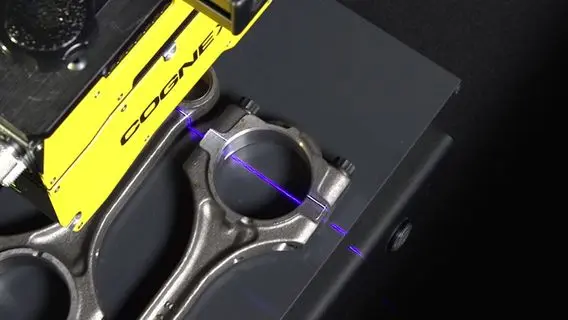
Amid the noise about humanoids and robotaxis, the corner of autonomy that already sits in tens of thousands of factories is undergoing its own quiet reinvention. Machine vision — the cameras and software that let a production line see — is moving from rigid rule-following to something closer to judgement, and the economics are shifting with it.
From six figures to the edge
The old machine-vision deal was punishing. A decade ago, deploying an advanced vision system could require six-figure spend once hardware, software, integration and engineering were counted, which confined it to the largest manufacturers. That barrier is falling on two fronts at once: cheaper, more capable 3D sensing, and AI that a factory engineer can train without a computer-vision PhD.
The hardware direction was on display at Automate 2026, where Cognex — the market's revenue leader — launched the In-Sight 6900, an edge AI vision controller built on NVIDIA's Jetson platform delivering up to 157 TOPS of AI performance directly on the line, with no external PC or server rack. That "on the edge" design matters for a practical reason: inspection at production speed cannot tolerate the latency of shipping images to a data centre and waiting for an answer. Intelligence has to sit at the camera.
From rules to examples
The deeper change is in how these systems are taught. Traditional machine vision was rule-based: an engineer painstakingly programmed what a good part looked like, and any defect that didn't match the rules — or any defect that changed appearance — required reprogramming. That approach broke on exactly the tasks humans are good at, like spotting cosmetic flaws, because a scratch or a dent rarely looks the same twice.
AI inverts the workflow. Modern systems learn from examples — show the model good and bad parts and it infers the boundary — so a non-specialist can train an inspection in minutes, and newer tools push toward describing a defect in words and having the model find it with no labelling at all.
> [QUOTE] A shift "from systems executing predefined checklists to systems that can perceive, interpret, and judge." — Cognex, at Automate 2026
That is the phrase to hold onto: perceive, interpret, judge. It reframes the camera from a pass/fail gate into a source of manufacturing intelligence — classification, measurement, process optimisation — that compounds over time.
Where the value is moving
For buyers, the competitive picture is the useful part. The market is splitting along a familiar autonomy fault line. Hardware-integrated incumbents — Cognex, and premium-priced Keyence — sell proven, industrial-grade reliability with fast payback (Cognex-style deployments are often cited at 8-12 month paybacks through reduced defects and rework). Software-first challengers — Landing AI, founded by Andrew Ng, with customers including Foxconn and Denso — bet that the real bottleneck is data, not models, and sell flexible cloud-trained deep-learning platforms.
The strategic tell: as example-trained AI becomes table stakes, "we have AI" stops being a moat. The defensible position shifts to depth of integration into the manufacturing workflow — the label management, the line data, the MES and quality systems the model plugs into. Edge AI overall is projected to grow from around $25 billion in 2025 to well over $100 billion by the early 2030s, and inspection is one of its clearest revenue engines.
What to watch
Three things for anyone specifying a vision system in the next year. First, edge versus cloud: where does inference actually run, and can the line's cycle time survive a round trip if it's not local? Second, training model: rule-based, example-trained, or text-prompted — and how much specialist labour does each demand from your team? Third, and most important for ASR's readers, ask the vendor for the numbers that matter: false-reject and false-accept rates at your line speed, not a demo's. A vision system that stops good product is as expensive as one that passes bad — and that is the figure the datasheet is least eager to print.
Cite this article
Rob Polli. "Sector briefing: machine vision stops inspecting and starts understanding." Autonomous Systems Review, 3 Aug 2026. https://autonomoussystemsreview.com/articles/sector-briefing-machine-vision-stops-inspecting-and-starts-understanding.