The Gulf already runs driverless taxis. GITEX is where it sells the next step
While Europe debates permits, Dubai and Abu Dhabi have paying passengers in cars with nobody at the wheel. Ahead of GITEX, a look at what’s actually running, and what the region wants next.
Marcus Macaulay — Publisher
Most robotaxi coverage still reads like a forecast. In the UAE it reads like a timetable.
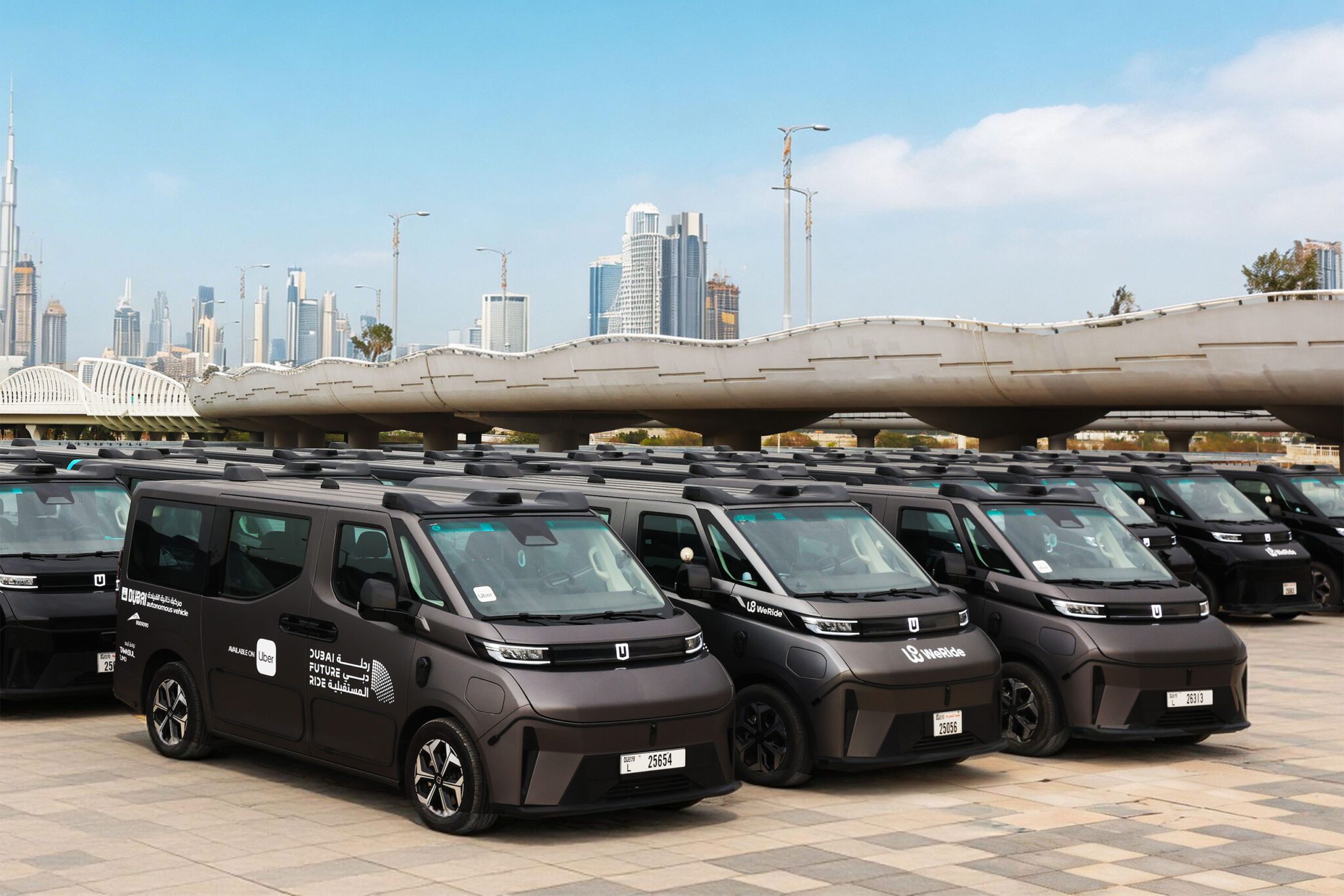
Abu Dhabi went first. Fully driverless robotaxi services launched in Abu Dhabi after two weeks of private trials, making the UAE capital the first city outside the US to host fully driverless taxis operated by Uber and WeRide. Public commercial operations began on 26 November 2025 without a vehicle specialist inside, starting on Yas Island. It wasn’t a cold start: WeRide had been running public robotaxi operations in Abu Dhabi since 2021.
abu dhabi launches fully driverless robotaxi service
Dubai followed within months. WeRide and Uber launched fully driverless, fare-charging robotaxi operations in Dubai’s Jumeirah and Umm Suqeim districts with the Roads and Transport Authority, after a supervised trial from December 2025 and a driverless permit granted in February 2026. The permit already points further out: planned expansion covers Dubai Silicon Oasis, Dubai Investment Park and Al Hamriya Port.
A second operator is now in the same market. Uber has started running Baidu’s Apollo Go driverless service on its Dubai network, with plans for “thousands” of vehicles in the emirate, and Apollo Go also plans more than 1,000 driverless cabs with Dubai Taxi Company.
The numbers behind it. WeRide runs more than 200 robotaxis across the Middle East and reports operational profitability in the region since 2025. In February 2026 it and Uber committed to at least 1,200 robotaxis across Dubai, Abu Dhabi and Riyadh. Uber also holds a stake in WeRide: a disclosed beneficial ownership of roughly 5.82% of its Class A shares. In this market the platform and the robot maker are increasingly the same bet.
Why the Gulf, not London or Berlin. The short answer is that the state is the customer, the regulator and the cheerleader at once. Dubai’s target is for 25% of journeys to be autonomous by 2030, and the permits have followed the target rather than lagging behind it. Weather, grid-plan roads and a political appetite for being first all help. The harder part, scaling from a few hundred cars to thousands without an incident that changes the mood, hasn’t been tested yet.
It isn’t only cars. Abu Dhabi has been trialling an autonomous patrol boat for marine safety, the same uncrewed-vessel story ASR has been tracking in naval programmes, here applied to civil policing.
What to watch at GITEX. GITEX Global runs 7–11 December 2026, moving to a new home at Expo City Dubai. Expect fleet-size announcements, new districts and new operators. The questions worth asking on the floor are the ones press releases skip: rides per vehicle per day, remote-assistance ratios, and what happens to the economics when the fleet passes a thousand cars. ASR will be there asking them.
Cite this article
Marcus Macaulay. "The Gulf already runs driverless taxis. GITEX is where it sells the next step." Autonomous Systems Review, 9 Nov 2026. https://autonomoussystemsreview.com/articles/the-gulf-already-runs-driverless-taxis-gitex-is-where-it-sells-the-next-step.