Solinftec Deploys 100-Robot Fleet Across 55,000 Acres, Cuts Chemical Use by 85%
Agricultural robotics has moved from demonstration units to documented fleet operations. Solinftec's Solix deployment across the U.S. and Puerto Rico in 2026 offers the clearest evidence yet that autonomous farm systems can deliver measurable ROI at commercial scale.
A Deployment That Changes the Conversation
In 2026, agtech company Solinftec crossed a threshold that the agricultural robotics industry has been approaching for over a decade: the deployment of more than 100 autonomous Solix robots operating across 55,000-plus acres in the U.S. and Puerto Rico. The reported outcome — an average 85% reduction in chemical usage — is not a laboratory result or a trial-plot figure. It is a fleet-scale operational metric.
That distinction matters. The commercial credibility of autonomous systems in agriculture has long been undermined by a cycle of well-funded prototypes, selective pilot data, and trade-fair demonstrations that never reached production scale. This deployment breaks that pattern.
What the Solix System Actually Does
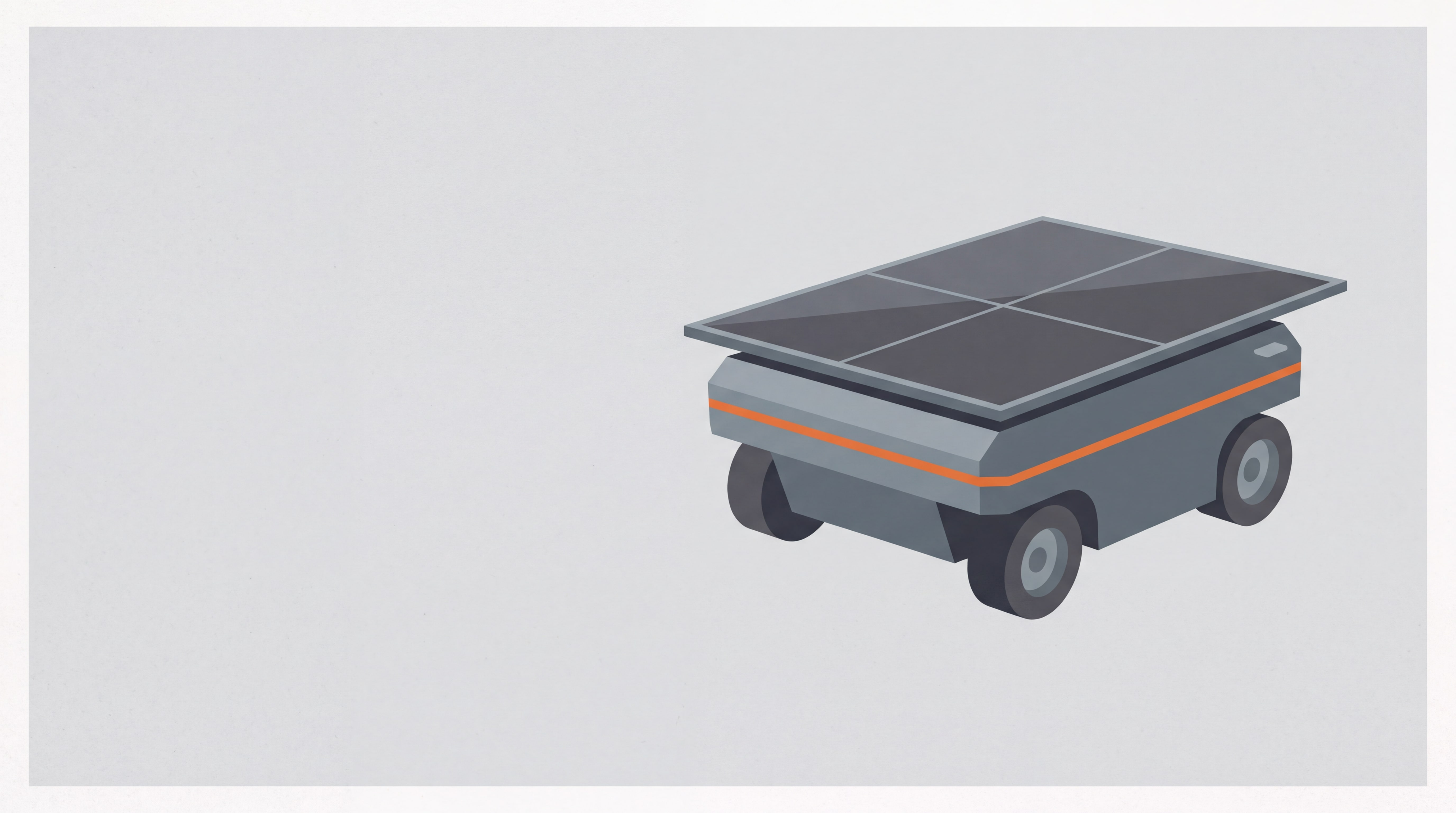
The Solix robot is an autonomous field unit designed for precision agronomic tasks, most notably targeted weed detection and treatment. Rather than applying chemicals uniformly across a field — the standard practice in conventional farming — each robot uses machine vision and AI-driven navigation to identify individual plants and apply treatment only where needed.
The autonomy stack enabling this is not a single sensor or algorithm. It combines computer vision for plant identification, GPS-guided navigation for field traversal, and software that coordinates multiple units operating simultaneously. The result is a system where a single operator can manage a fleet of machines across a large acreage rather than directing individual units or tasks manually.
This last point carries significant operational weight. The labor model in conventional farming assumes human operators for each piece of equipment. A fleet managed through a self-service software platform inverts that assumption. One person overseeing dozens of robots across thousands of acres is not a speculative future state — it is what this deployment describes.
The 85% Chemical Reduction: What It Means in Practice
An 85% reduction in chemical usage is a consequential figure on multiple dimensions. For the farm operator, it represents a direct input cost reduction. Herbicides and pesticides are significant line items in agricultural budgets, and a reduction of that magnitude changes the unit economics of crop production in a measurable way.
For regulators and land owners with sustainability obligations, the figure speaks to environmental load. Broad-acre chemical application is a known contributor to soil degradation, water contamination risk, and regulatory pressure. A system that cuts that application by 85% while maintaining or improving agronomic outcomes removes a material compliance and reputational risk.
For the robotics and autonomy industry more broadly, the figure provides a benchmark. It is specific enough to anchor procurement decisions, investor analysis, and competitive positioning. Vague claims about efficiency gains are common in this sector. A named company, a named product, a named geography, a named acreage figure, and a specific percentage reduction is a different category of evidence.
Scale as the Enabling Condition
The 100-robot threshold and the 55,000-acre coverage are not incidental details. They are the conditions under which the economic and sustainability claims become credible and replicable.
At small scale, autonomous systems often appear cost-effective because the comparison is against manual labour on small plots. The economics shift — sometimes unfavourably — as operations scale up and the full costs of fleet management, maintenance, software licensing, and machine downtime become visible. A deployment of this size, by contrast, is operating in the regime where those costs are real and must be absorbed within the commercial model.
The fact that this deployment spans both U.S. mainland operations and Puerto Rico also signals something about the system's adaptability to different agronomic and logistical environments. Field conditions, crop types, and infrastructure vary between those geographies. A single autonomy stack functioning across both is evidence of platform maturity rather than point-solution engineering.
Implications for Procurement and Integration
For operations managers and procurement teams evaluating autonomous field systems, the Solinftec deployment provides several reference points worth examining directly.
First, the self-service fleet management model is a structural shift in how labour is accounted for in autonomous system deployments. The relevant question is not just capital cost per robot but total cost of operation per acre, including the reduced headcount requirement at the management layer.
Second, the chemical reduction metric should be evaluated against actual input costs in the target operation. An 85% reduction on a high-spend crop in a heavily treated region delivers a different financial outcome than the same percentage reduction on a low-input crop. The commercial case is real, but it requires site-specific calculation.
Third, the fleet scale question is worth attention. Deploying one or two autonomous units as a trial does not replicate the conditions under which the fleet coordination software delivers its value. The operational efficiency of a managed fleet is a function of the software layer, not just individual robot capability. Procurement decisions that treat autonomous farm robots as standalone machines rather than nodes in a managed network will underperform the available benchmark.
From Prototype to Platform
The agricultural robotics sector has produced credible technology for years. The constraint has not been the hardware or the AI. It has been the absence of documented, large-scale deployments operating under real commercial conditions and reporting verifiable outcomes.
Solinftec's 2026 Solix fleet deployment across more than 55,000 acres does not resolve every open question in agricultural autonomy. It does establish that a 100-plus robot fleet, managed through a software platform by a reduced human team, can deliver a documented 85% chemical reduction at commercial scale. That is a different kind of evidence than the sector has previously been able to point to, and it sets a concrete baseline against which other systems will now be measured.
Cite this article
Rob Polli. "Solinftec Deploys 100-Robot Fleet Across 55,000 Acres, Cuts Chemical Use by 85%." Autonomous Systems Review, 10 Nov 2026. https://autonomoussystemsreview.com/articles/solinftec-deploys-100-robot-fleet-across-55-000-acres-cuts-chemical-use-by-85.