Agile Robots Reaches $8.5bn Valuation as Europe's First Humanoid Factory Scales
A Munich-born spin-off from the German Aerospace Center has opened a serial-production humanoid facility in Bavaria and secured a SoftBank-led $500 million funding round — marking a significant moment for European industrial robotics.
Marcus Macaulay — Publisher
Inside the Fürstenfeldbruck Factory
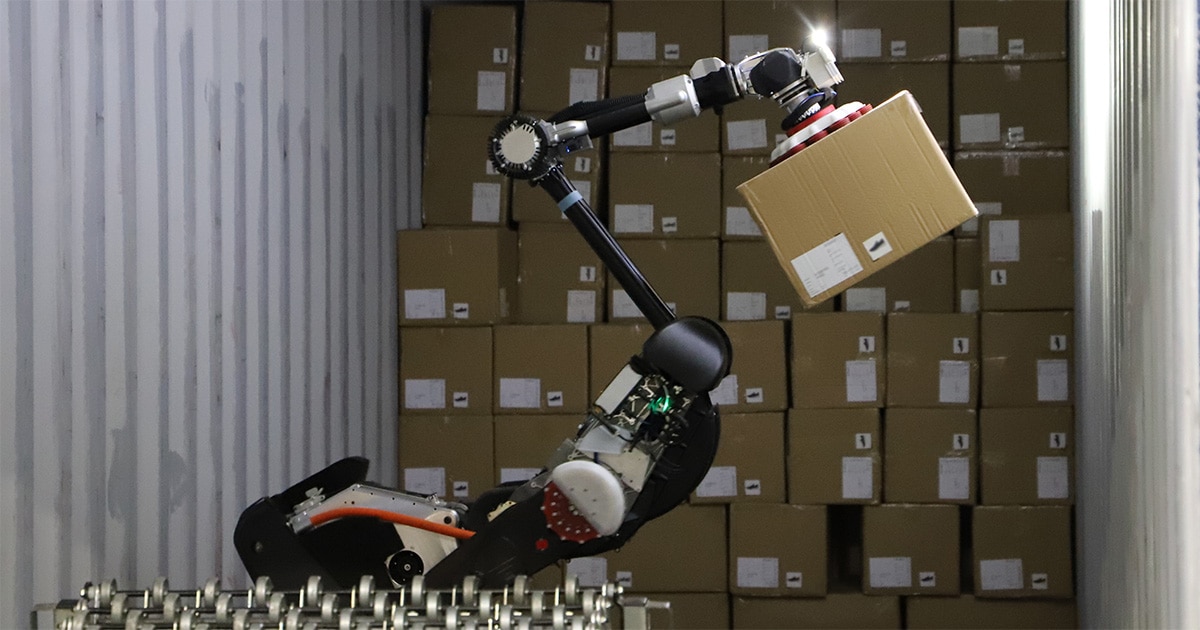
The town of Fürstenfeldbruck sits roughly 25 kilometres west of Munich, better known for its air base than for advanced manufacturing. Since September 2026, however, it has housed something that has no equivalent anywhere else in Europe: a 10,000-square-metre facility dedicated to the daily serial production of full-scale humanoid robots.
Agile Robots AG, headquartered in Munich and born from a DLR — German Aerospace Center — spin-off, opened the site with a stated production target of 10,000 humanoid and wheeled robots per year. On 12 November 2026, the company announced a $500 million Series F funding round led by SoftBank, pushing its valuation to $8.5 billion. The round also counts NVIDIA among its backers, a detail that reflects the degree to which the robotics and semiconductor industries are now converging around the same infrastructure.
The question worth asking plainly is this: is Agile Robots genuinely building a scalable industrial humanoid business, or is this another wave of well-funded ambition that stops short of the factory floor? The evidence from Fürstenfeldbruck suggests the former — though the work of converting production capacity into real-world deployment has barely begun.
From Research Arms to Full-Scale Humanoids
Agile Robots did not arrive at humanoid production overnight. The company built its early reputation on high-precision industrial robotic arms — the Diana and Thor series — which are still manufactured in a separate facility in Kaufbeuren, Bavaria. The Diana 7, a seven-axis research arm with 0.5 N force accuracy, has been sold through authorised resellers at approximately $48,950, giving the company a commercially grounded base before it moved into the considerably more complex territory of full-body robots.
The Agile ONE industrial humanoid, launched on 19 November 2025, stands 174 cm tall, weighs 69 kg, and carries a 20 kg payload with an eight-hour battery runtime — specifications that position it squarely for manufacturing-floor tasks rather than laboratory demonstration. A research-focused variant, the Agile ONE SN, followed on 21 October 2026, featuring 71 degrees of freedom — 31 across the body, 20 per hand — and running on NVIDIA's Jetson Thor onboard computer with Isaac GR00T software. The dexterity implied by that hand specification is significant; most industrial tasks that currently require human workers involve fine manipulation that earlier-generation robots could not replicate.
Over 20,000 robotic solutions from Agile Robots have been deployed to date, according to figures released on 10 November 2026 — a number that reflects the company's established industrial arm business as much as its humanoid ambitions.
The Audi Partnership and What It Tests
On 21 October 2026, Agile Robots announced a partnership with Audi in Ingolstadt to test mobile humanoids for automated parts sequencing. The trials take place within a 'virtual twin' factory environment — a digital replica of the production line used to train and validate robot behaviour before physical deployment.
The choice of parts sequencing as the initial use case is deliberate. It is repetitive, spatially demanding and sufficiently structured that a well-trained system can be evaluated against clear performance benchmarks. It is also a task that automotive manufacturers have long sought to automate, and where errors carry direct cost consequences. Working with Audi in this configuration gives Agile Robots a credible proving ground that is harder to dismiss than a controlled demonstration.
"The Agile ONE is designed to handle the complexity of real manufacturing environments," the company has stated, though the Ingolstadt trials remain at the testing stage. What they establish — or fail to establish — over the coming months will matter considerably to the broader industrial robotics market.
Infrastructure at Scale
Building humanoid robots in volume requires more than a production hall. Training the AI models that give those robots useful behaviour requires substantial compute infrastructure. In February 2026, Agile Robots announced it would serve as the anchor customer for a €1 billion Industrial AI Cloud in Munich, operated jointly with Deutsche Telekom and NVIDIA. The stated purpose is training 'Physical AI' foundation models — the kind of generalised robotic intelligence that allows a system to adapt to new tasks without being reprogrammed from scratch.
The acquisition of thyssenkrupp Automation Engineering in November 2025 added a different dimension: more than €200 million in automotive-sector revenue and an established engineering capability that now operates as the company's Krause Automation division. That acquisition gave Agile Robots immediate access to customer relationships and project pipelines in the automotive supply chain — the same sector it is now targeting with the Agile ONE.
Taken together, the Fürstenfeldbruck facility, the Munich AI cloud, the Kaufbeuren arm production site and the Krause Automation division represent a vertically integrated industrial stack that few robotics companies outside the United States or East Asia have attempted to build.
Why This Matters Beyond Bavaria
Europe has not historically been the place where humanoid robotics scaled. The dominant players in this space — Boston Dynamics, Figure, 1X, Unitree — are either American or East Asian. Agile Robots' emergence as a commercially serious European competitor, anchored in German engineering culture and backed by global capital, represents a structural shift worth tracking.
Agile Robots is building the first mass-production humanoid facility in Europe — and doing so in a country with direct access to the automotive customers most likely to adopt this technology at scale. The $8.5 billion valuation reflects not just what the company has built, but the market's read on what that position is worth in a sector that is moving from prototype to production faster than most analysts anticipated.
Whether the Fürstenfeldbruck facility reaches its 10,000-unit annual target — and whether the Audi trials convert into full deployments — will be the defining questions for the next phase. For now, the factory exists, the funding is secured, and the automotive sector is watching.
Cite this article
Marcus Macaulay. "Agile Robots Reaches $8.5bn Valuation as Europe's First Humanoid Factory Scales." Autonomous Systems Review, 12 Nov 2026. https://autonomoussystemsreview.com/articles/agile-robots-reaches-8-5bn-valuation-as-europes-first-humanoid-factory-scales.